Jews On The Web
IMPORTANT: Some of these broadcasts require you to use Chrome,
Firefox or other browsers (not Internet Explorer) that properly utilize
Flash/other video streaming methods.























Actress Mayim Bialik
talks about Jewish Values
www.youtube.com/v/-8fApAzQL_Y?hl=en_US
Highlighting Being Jewish
Could Help You on Your Resume?
Check out this article. - What do you think about it's premise and findings? Let us know at admin@JewsOnTheWeb.com.
The History of Krav Maga
Krav Maga is a fairly new martial art and form of self defense, as it was created during the early to mid 1930's. It was originally formed in Czechoslovakia and Hungary by a man named Imi Lichtenfield (he was also known by the name Imi Sde-Or) and later was developed in Israel by the Israeli military. It was first taught in Bratislava, however, to help teach the Jews how to defend themselves
against
the raging Nazi military.
Around the year 1948, the State of Israel was created and Imi Sde-Or was named the Chief Instructor of Physical Fitness and Krav Maga and taught the form of martial arts to students who would later become members of the Israeli Defense Forces. Sadly, Imi Sde-Or died during the year 1998 after about 20 years of faithful service.
It
was not until around the year of 1980 that Krav Maga began to find a place outside of Israel. Because of its Jewish link, when six masters traveled to the United States to help spread the martial art, it was first and foremost taught in centers for the Jewish community.
It is a fact that Krav Maga is an extremely unique and functional martial art and because of this, it found its way into American military and law enforcement tasks as well. These six instructors went
back and forth between America and Israel to help bring about several schools to help get the art set up permanently.
As Krav Maga developed into more of a martial art and a sport rather than a mere form of self defense, authorities had to devise a system to help establish ranks. While some forms employ a traditional belt system (with the traditional colors of yellow, orange, green, blue, brown and black), most older forms employ a patch ranking system instead. With this type of ranking, there are four major
categories: Practitioner, Graduate, Expert and Master. In the first three categories, there are five levels in each and in the fourth category, there are three levels. This creates a total of eighteen levels in traditional Krav Maga.
Since the founders taught different forms of the martial art to military and law enforcement personnel, it was only fair that a different ranking system be used for them as well. The general idea is the same, however, the military categories are known as Fighter, Warrior and
Operator.
Regardless of the particular style of Krav Maga, however, one thing is for certain, it is one of the most brutal known forms of self defense available today. Because the Jewish community were learning self defense to help them fight against the Nazi in the 1940's, Imi Sde-Or had to create something both vicious and effective or all would have been lost. Krav Maga stresses fighting in the worst possible scenario, often students will practice to extremely loud music or strobe lights to help them tune
out external stimuli and to teach them to focus on the fight. This too stems from the original purpose of Krav Maga. Its origins make Krav Maga one of the most useful martial arts known today.
Read more: http://www.articlesbase.com/sports-and-fitness-articles/the-history-of-krav-maga-179983.html#ixzz0t24ZyLbr
Under Creative Commons License: Attribution
James Dunn - About the Author: James Dunn owns and opperates Martial Arts Tutor Visit Krav Maga Lessons for more information about Krav Maga or Kickboxing Lessons to learn about Kickboxing.
Jewish Family Tree Resources
Author: Anna B O'Brien
Doing a Jewish family tree, basically uses the same genealogy research methods that are used by most family history searches.
It wil take some extra digging, because of the method most Jews had to use to leave a country.
In this article I will show you where to begin your search and what records are of vital interest in pursuing your Jewish family history.
Because of the centuries of injustice and recently the Holocaust, many Jews believe it is an impossible task to try to trace their Jewish roots back to the old country.
Jewish families started using permanent family surnames as early as the 10th century. They were used mostly be the Sephardic Jews in Portugal, Spain and Italy. Not until much later did, the Ashkenazi Jews of Eastern Europe and Germany begin that practice.
Many Orthodox Jews today still use the traditional naming pattern. Those are when family names are passed down from generations.
It is traditional in Easter Europe and Germany's Jewish families to name a baby after a deceased relative. This is a way of showing respect and honoring that person's memory.
It can make tracing your Jewish roots a little harder, because the name may not be identical to the deceased relative just similar in some way to the ancestor's given name.
Many times the name just sounds like the ancestors.
That is the difference between the Ashkenazi and Sephardic Jewish families who choose to name their babies after living relatives.
Many surnames are reserved for specific locations in Eastern Europe
Here a just some basic steps you can use to begin your Jewish family tree.
The number one place for all genealogy research to begin is at home.
Start talking to your family elders. They will love the attention and by sitting down with pen and pad you can ask them about their past. Do they remember their grandparent's names and where they came from?
Find out if they may remember a specific town or village where their ancestors may have lived. Ask them if they remember any cousin's names, schools and the names of synagogues, they may have attended.
When you have as much information as you can get from your relatives the next course of action is locating the following records.
Census records will give you information. In the U.S. from 1900 on the census records, include year of immigration.
After that, you can then try passenger arrival records, as well as naturalization.
Passenger Arrival list-When arriving in the U.S, these lists after 1893 contain last residence. With that kind of information, you may be able to find the town, province or country your relative came from. It will depend on the ship and what records they kept.
The good news for anyone looking for information after 1906 those records will show birthplace, town or city and country.
Naturalization Records in the United States will show information on the country of origin. Like the passenger arrival list after 1906, these records should be a great help in your genealogy search. Many of these records will show place of birth; residence in the old country, the date, port and ship arrival in the U.S.
The immigrant's name is listed on the passenger list. Many immigrants including Jews changed their names after arriving.
Therefore, if you are lucky enough to obtain any records after 1906 they may be able to tell you what name your family used in the old country.
Do not forget to get your basic records in order, such as birth, death and marriage records of your immediate relatives.
Always check your family homes for old journals and photo albums. Search old newspapters for obituaries and find probate records.
When doing a genealogy search for your family tree, remember what a great tool it will be for future generations.
Article Source: http://www.articlesbase.com/genealogy-articles/jewish-family-tree-resources-2098009.html
About the Author
Find out more. Get free informaton on how to begin your family tree. Click Here http://www.makefamilytree.info

History of the Hebrew Language and How Best To Translate It
Author: Sandy Bernstein
Hebrew wasn't spoken much over the centuries, although it was used extensively as a literary language and as the liturgical language of Judaism. Many dialects of Classical Hebrew (sometimes called Medieval Hebrew) existed at the time, including the Midrashic Hebrew of the third century BC.
Employed in the Mishna and found in the Dead Sea Scrolls corresponding to the Hellenistic and Roman Periods before the annihilation of the Church in Jerusalem. The Babylonian Gemorrah, written about this time, was usually drafted in the Aramaic language and utilized a certain quantity of Greek words as well.
It was only at the start of the 19th century that Modern Hebrew became the written and spoken language of the Jewish folk. It is easy to understand how troublesome it can be to interpret Hebrew into any other language. The modern kind of the language is an accumulation of different dialects and colloquialisms. It includes words from plenty of other languages eg the romance languages of French, Spanish and Italian as well as Greek, Yiddish and Arabic. Additionally, during the past century, many English words became an important part of both written and spoken Hebrew. The Hebrew language is always developing, with new words being added when required. Additionally, Modern Hebrew has many local ideas and terms that maintain their meaning just when employed in the right context and will otherwise lead to misunderstandings and misinterpretations. As an example, many years back, when the film industry in Israel was first taking off, the Hebrew flicks used subtitles in one or two languages in order to appeal to as many different motion picture goers right now.
These subtitles were customarily inaccurate and completely reduced the dialog of the characters in the flick.
An automatic translation software programme, while quicker and cheaper, will successfully interpret only the words of the text and will leave out a lot of the true personality of the Hebrew words and sentences. A manual translator, ideally one who has lived in Israel, who is accomplished in the 2 languages, will inject the true nature and flavour of the language into his interpretation. Yes, it is more expensive, but if precision is needed, manual translation is the only possible way to go.
Article Source: http://www.articlesbase.com/languages-articles/history-of-the-hebrew-language-and-how-best-to-translate-it-4203763.html
About the AuthorSandy Bernstein is a Writer, blogger and part time translator. Sandy spechalizes in English to Hebrew Translation. She has extensive knowledge on the subject of language history, and counts it as more of a hobby then work when having to research anything to do with languages.The Hebrew language is a traditional Semitic one, used in the time of the Old Testament. Biblical Hebrew is frequently known as Classical Hebrew and has been traced back to the tenth century BC to the dominions of Judah and Israel.
Jewish Red Army Soldiers Honored by Blavatnik Archive Foundation
New exhibit in Moscow tells the stories of the more than 450,000 Jewish
soldiers who fought in the Russian army during World War II
Len Blavatnik, a
U.S. industrialist, is also a well-known supporter of Jewish causes, especially
as it relates to his birth country of Russia. So it's not surprising that he was
highly involved in the recent exhibit in Moscow dedicated to Jewish soldiers in
the Russian army during World War II.
Len Blavatnik was at the opening in
Moscow of the exhibit "Writings and Reflections of Jewish Soldiers in the Red
Army" at the Central Museum of the Great Patriotic War. The exhibit uses
letters, photos and other factual information to tell the story of Russian Jews
who fought the Nazis during World War II. Jewish soldiers suffered staggering
losses during the war: an estimated one-third of the 450,000 Jewish soldiers in
the Russian army were killed.
He has extended his charitable work to
telling the story of Jewish soldiers. In an interview, he told Jewish news
agency JTA that he felt it was important to tell the stories of Jews being
heroes during the war as well as being victims. He said that it's important to
tell the stories now since the remaining soldiers who fought during the war are
dying of old age.
The exhibit is just one of the many philanthropic
endeavors advancing Jewish causes supported by Len Blavatnik. He currently sits
on the board of Tel Aviv University (along with similar roles at Cambridge and
Harvard). He is also an active board member of the Center for Jewish History in
New York, which preserves Jewish history and culture and serves in educating the
public about Jewish history and traditions.
In addition, billionaire U.S.
industrialist Len Blavatnik is known to have a passion for higher education. He
has donated his time and energy to ensure the progress of learning at some of
the major universities in the world and currently sits on boards at Cambridge
University, Harvard University, and Tel Aviv University.
With this in
mind, the latest bit of Len Blavatnik news should come as little surprise. It
has been recently reported that Mr. Blavatnik has donated 75 million to Oxford
University in England to create a new school for government. The new Blavatnik
School of Government will help to prepare future leaders of the UK (and other
countries) to provide the type of powerful, decisive leadership needed in the
21st century.
Many Oxford alumni have risen to power within the UK. David
Cameron recently became the 26th Oxford graduate to become Prime Minister.
Others have included Tony Blair, Margaret Thatcher and Edward Heath. Many other
leaders from around the world have matriculated at Oxford and taken the lessons
learned back to their home countries. Funds donated by Mr. Blavatnik will be
used to build a home for the school along with paying for 40 academic posts and
hiring a dean to run the school.
The fact that Mr. Blavatnik would make
such as generous donation is no surprise. A self-made billionaire, Mr. Blavatnik
has used a considerable amount of his personal wealth for philanthropic causes.
The Blavatnik Family Foundation has made many significant contributions to
worthy causes in recent years. Among the cultural entities that the foundation
supported to are the British Museum, Tate Modern, Royal Opera House, National
Portrait Gallery and Museum of Modern Art. In addition , the Blavatnik Family
Foundation has teamed with the New York Academy of Sciences to create the
Blavatnik Awards for Young Scientists to honor outstanding young scientists
working in a variety of fields.
, the Blavatnik Family
Foundation has teamed with the New York Academy of Sciences to create the
Blavatnik Awards for Young Scientists to honor outstanding young scientists
working in a variety of fields.
Article Tags: Jewish
Soldiers, Jewish History
Source: Free Articles from
ArticlesFactory.com
ABOUT THE AUTHOR
Blavatnik
Awards | Blavatnik
Family Foundation
Unique Translation of the Paleo-hebrew Tanach
Author: Aaron Cohen
While in Israel, I heard of a Black Rabbi who may be the first to have translated a Paleo-Hebrew text like the Dead Sea scrolls or the Samaritan’s text. I travelled in the Negev to visit him in a Jewish kibbutz on the border of the West Bank. Howshua Amariel, a Rabbi/Researcher from Chicago, came to Israel several years ago. Amariel, a former member of the Field Museum of Natural History in Chicago, has also travelled extensively around the world from North, Central, to South America and London to South Africa. Yet, he has primarily focused on investigating artifacts and sites of the Israelite people in the Middle Eastern countries of Lebanon, Syria, Jordan, Israel, and Egypt for 20 years.
About 12 years ago he began translating a Paleo-Hebrew text partially derived from the Dead Sea Scrolls and the Samaritan text. He beliefs that what he calls ‘old Cherokee’ or the inscriptions found in the Americas is actually Paleo-Hebrew and that his people are descendants from the Hebrew people also known as Phoenicians that travelled all over the world and setup colonies.
In 1998, a Memphis based newspaper called 'Jerusalem Chronicles', printed an article concerning Amariel’s work with Egyptian hieroglyphs. He was displayed in a picture reading ancient Hebrew off the walls of a temple structure ‘BYT- YHWH’ (Beth Ha-Shem) built by Jews at Elephantine, Egypt.
“For over 20 years I have used my knowledge of the ancient Hebrew language to identify the history of my people written in stone across the globe;” said Amariel, a Hispanic (Cherokee) Indian that is among a tribe whom have been mentioned for centuries in the Americas by European historians (Jews and non-Jews) as a potential lost tribe of Israel.
“The language which is called Hebrew today is actually Babylonian or Aramaic as the Nash Papyrus, mercantile document and the Elephantine Aramaic Papyri proved;” said Amariel. “This language was adopted by the Hebrew people when they were taken to Babylon as captives. Hebrew/Phoenician ceased being a spoken language by all and became a language of prayer, study, and/or reading, the Torah, until later when the Torah itself was transcribed into Babylonian in 440 B.C.E. by Ezra the scribe. It was translated in order that people could read it and keep the Law. It became what is known as the modern square Hebrew writing. This Babylonian script became the writing of the people. The words were Hebrew/Phoenician but the letters were square Babylonian/Aramaic writing. When in 70 C.E. the Romans attacked the homeland of the Phoenician/Hebrew people and scattered them throughout the world.”
Dr. Gérard Nissim Amzallag, is a professor, biologist and researcher at the Judea Center for Research and Development, has published numerous books and articles (in French) and is the author of the book ‘The Copper Revolution’(in Hebrew). He doesn’t live too far from Amariel in either location or belief. Professor Amzallag has spoken with Amariel about the Hebrew Phoenician connections in language and archaeology. Amzallag agrees with Amariel that the Hebrew and Phoenician people and language were the same. He pointed out to us in his book (pg 111) a diagram of the alphabets (Aramaic, Proto-Canaanite, Phoenician and Biblical Hebrew) found in Israel from archaeology. The Phoenician and Biblical Hebrew alphabets were clearly the exact characters similar to one another and also to that of Amariel’s book.
The body of each page of the text is structured with two congruent lines (interlinear): The upper line is written in the original Ancient Hebrew and uses a specially designed font by the Amariel Family entitled 'OBR' (the word for 'Hebrew') that is read from right-to-left. The lower line is the translation of every one, two, or three letter Ancient Hebrew word on the upper line and is also read from right-to-left (in Ariel font) that is translated into English words (yet are in Ancient Hebrew grammar).
“The primary language of the text is the Ancient Hebrew writing of 'THIS REPORT'. However, it includes the English formal equivalence translation of the Ancient Hebrew words directly above them. Each Ancient Hebrew 'phrase word' is separated by a vertically centered black dot and are interpreted as commas, periods, or question marks based upon the expression in the sentences;” said Rabbi Amariel as he pointed out various examples in his text.
Besides Professor Amzallag, Amariel has given manuscripts of his translation to at least three additional expert Israeli scholars that support the concept of his book. Yehuda Goverin, an archaeologist experienced in the Old Hebrew characters that Amariel first met in 2002 at the Tel Arad National Park, and voluntarily worked with him on an archaeological dig of the House of Yahweh (a site from which many Paleo-Hebrew artifacts have been uncovered).
Robert Deutsch, an archaeologist, head of the Archaeological Center and author of the book 'Messages from the Past' (artifacts and seals written in Ancient Hebrew) that he also met while volunteering in 2002 at the Tel Arad National Park.
Yitzchak Kerem, a researcher at the Hebrew University of Jerusalem, Founder and Director of the Institute of Hellenic-Jewish Studies at the University of Denver in Denver, Colorado (USA), Editor "Sefarad, the Sephardic Newsletter, and Historian and Filmmaker of Greek and Sephardic Jewry, Aristotle University Thessaloniki, Greece. That he first met in 2004 at the 'Kulanu' Jewish Book meeting in Jerusalem.
Each scholar has openly agreed with the Hebrew-Phoenician people and Paleo-Hebrew alphabet of the Biblical text, because that isn’t new to the scholarly world and there have been other Torah’s published in Paleo-Hebrew, but without any translations. However, each of them is impressed by Amariel’s work because it is an extensive literal translation of the Hebrew/Phoenician language, but also because the method of the translation of the Paleo-Hebrew (ancient Hebrew) words is unique. ‘THIS REPORT’ is an interlinear formal equivalence (word-for-word) translation considered the first of its kind.
Yeshiyah, Howshua Amariel’s son studying to be a rabbi commented about the reaction of religious Jews, yeshivas and rabbis to ‘THIS REPORT’; “Most Rabbis are against translations of the text because understanding is lost, especially with the dynamic and partial literal translations that have been done up until now in English. Yet, we also have shown my father’s translation to rabbis and yeshiva students that have found the accuracy of translation of the Hebrew words into the English equivalent amazing. Those I showed the translation to questioned me on who translated such a precise meaning of the Hebrew thought? I told them with pride that my Aba [father] did it.”
On the upper line of Hebrew, within a phrase word, there are included grammar conjunctions such as the ? (that stands for 's) in the middle of a word, the ? (that stands for 'ing) in the middle of a word, the ? (that stands for 'ed) at the end of a word, and etc. However on the lower Translation line their equivalences are also translated with the word or name that they appear in and are separated from the word by an (') apostrophe (like- strength's, light'ing, walk'ed and etc.) for the reader to learn the ancient language as they read along. Every Old Hebrew root word (either alone or within a phrase word) uses between 1 to 3 characters. When the one letter grammar conjunctions (like- 's, 'ing, 'ed, and etc.) are added to a 2 or 3 letter word, the 2 letter word becomes a 3 letter word and the 3 letter word becomes a 4 letter one. However, names or places may use more and are considered phrase words within themselves with their own hidden meanings.
The Old Hebrew has after each word, name, or 'phrase word' a division between each word signified by a vertically-centered dot. Also every paragraph (or extended sentence) ends with an "and", then has a period (like this " . ") or question mark (like this " ? ") on the English translation line. The next paragraph begins with a "Then" or capital "And" that is within a phrase word. In addition, the end of every book or story change is marked, on the Hebrew line, by a vertical line (like this " | "). Because of these ancient Hebrew grammarian lessons and the addition details that aid in understanding the old Hebrew language in English that are found within this text, for now several Israeli scholars that have seen Amariel’s work are impressed by text, yet they also believe that it will take much more study to learn this original translation and with it the Ancient Hebrew language.
Article Source: http://www.articlesbase.com/religion-articles/unique-translation-of-the-paleohebrew-tanach-558436.html
About the Author
Journalist, researcher and traveler
JudaicaMade in Israel?
What You Don't Know Does Matter...
To Israeli
Artists!
It
is a little known fact that much judaica and Jewish gifts are
actually made in India and China. Until recently, these items were
almost universally just imported
into the USA and distributed through almost all the major judaica
importers. However, since the more recent encouragement to buy things that
are made in Israel, a practice has arisen with a few companies
whereby they import judaica from India and China into Israel, and
then export it out from
Israel selling it to those who don't know as "From Israel"
when in fact it is not Israeli at all.
Understandably,
there are many many Israeli artists that are upset by this practice,
since there are stricter regulations for manufacturing, including the use
of children in adult employment. Plus, the quality of workmanship is
higher in Israel, and these artists continue to struggle while the
other products dominate
the market.
It
may be that you cannot find what you want that is made in Israel, and
of course there is no need to feel that you cannot buy other
products, but if it is
important to you to support Israeli artists and manufacturers, then
don't be afraid to ask WHERE the item you are looking at is actually
made, and BY
WHOM so that you are an informed buyer!
Here
are a few reasons to "Buy Made In Israel":
1.
Although you may pay a little more for genuine "Made in Israel"
Judaica, you will get better quality.
2.
When you buy Judaica made in Israel, you are supporting the artists
who live there. The tourism industry in Israel is very weak right
now, so any support
you can lend to Israel really does make a huge difference. Remember,
it is multiple small drops of water that make up a lake or an ocean.
3.
Judaica from India and China is sometimes cheaper, but some of it is
made by children who are working long, unacceptable hours. If you're
buying something
for a religious purpose, why would you buy it from a child who is
being overworked & not protected by employment laws?
4.
Judaica that is actually made in Israel is often of a much higher
quality
Remember,
there is a big difference between "from Israel" and "made
in Israel." At Studio Shofar we recognize that there is some
judaica that is not easily
available from Israel, at least not at prices affordable to many; in
addition, there are many Jewish artists living in America, Canada and elsewhere
who make beautiful judaica, whether tallits, jewelry, Shabbat items,
or more.
When
you shop for judaica products, look for stores that let you know up
front whether or not an item was made in Israel. For example, some
use an Israeli
flag next to Israeli-made products. This makes it easy for you to
make educated decisions in your purchases.
Source:
http://www.articlecircle.com
About
the Author Adam
Barnett works for Judaica Resources, Inc., dba, Studio Shofar Judaica
& Gifts, and hopes to help educate the judaica market to better understand
judaica products in general. Visit his website to learn more about
Israeli-made Jewish gifts and other judaica items at http://www.studioshofar.com
Jewish Wedding Speeches Are A Reaffirmation Of The Love For Each Other by Muna Wanjiru
A wedding is a wedding is a wedding, right? Wrong. Every wedding is special on its own right, and every wedding day is special to the couple getting married. But if all weddings are different does this mean that all wedding speeches are also different? For instance, would Jewish wedding speeches be any different from traditional Christian wedding speeches?And what about the rest of the world do
speeches given at any of these weddings
differ, from the above mentioned Jewish wedding
speeches et al? The answer, in many cases would be an unthinking, and emphatic Yes!” If however, deeper thought is given, you can’t help but notice that although each and every one of these special occasions as well as speeches given, are different, they are also essentially the same.
This means that if you listen very closely to an Irish wedding speech, and compare it with some of the more traditional wedding speeches as well as with Jewish wedding speeches, you will find distinct similarities between them. The core sentiment of the speech remains the same: to wish the bride and groom joy in their life, now and forever more.
The difference then, lies not in the sentiment that is expressed in the wedding speeches, but in the religious, and cultural doctrine that will be an essential part of any wedding. Even in weddings with no particular religious slant whatsoever, you will find that wedding speeches given, reflect this tone of spirit.
So if you have been chosen to honor and celebrate with the happy couple by giving a speech, you have no need to panic, right? After all, at heart all wedding speeches are the same, and you might as well use the same speech you used two years earlier for your sister’s wedding. But wait, this time you are attending a Jewish wedding. This means that you will in all probability have to bone up on your Jewish wedding speeches instead of using an earlier speech. Since there are some very specific traditions inherent
in a Jewish wedding, you will need to make sure that you are familiar with the various ins and outs of it. This way, if you need to, you can even make changes, off the cuff so to speak, and not have to worry if you have somehow managed to say the wrong thing!
But really, Jewish wedding speeches are more or less a reaffirmation of the love the bride and groom feel for each other, the joy you feel in being a part of this special occasion, and a blessing or a wish for the continued happiness of the bride and the groom. Kind of like any other wedding speech,
isn’t it?
Muna wa Wanjiru is a Web Administrator and Has Been Researching and Reporting on Wedding Speeches for Years. For More Information on Jewish Wedding Speeches, Visit His Site at JEWISH WEDDING SPEECHES
Article Source: http://www.articlesnatch.com
The History of Krav Maga
Krav Maga is a fairly new martial art and form of self defense, as it was created during the early to mid 1930's. It was originally formed in Czechoslovakia and Hungary by a man named Imi Lichtenfield (he was also known by the name Imi Sde-Or) and later was developed in Israel by the Israeli military. It was first taught in Bratislava, however, to help teach the Jews how to defend themselves against
the raging Nazi military.
Around the year 1948, the State of Israel was created and Imi Sde-Or was named the Chief Instructor of Physical Fitness and Krav Maga and taught the form of martial arts to students who would later become members of the Israeli Defense Forces. Sadly, Imi Sde-Or died during the year 1998 after about 20 years of faithful service.
It
was not until around the year of 1980 that Krav Maga began to find a place outside of Israel. Because of its Jewish link, when six masters traveled to the United States to help spread the martial art, it was first and foremost taught in centers for the Jewish community.
It is a fact that Krav Maga is an extremely unique and functional martial art and because of this, it found its way into American military and law enforcement tasks as well. These six instructors went
back and forth between America and Israel to help bring about several schools to help get the art set up permanently.
As Krav Maga developed into more of a martial art and a sport rather than a mere form of self defense, authorities had to devise a system to help establish ranks. While some forms employ a traditional belt system (with the traditional colors of yellow, orange, green, blue, brown and black), most older forms employ a patch ranking system instead. With this type of ranking, there are four major
categories: Practitioner, Graduate, Expert and Master. In the first three categories, there are five levels in each and in the fourth category, there are three levels. This creates a total of eighteen levels in traditional Krav Maga.
Since the founders taught different forms of the martial art to military and law enforcement personnel, it was only fair that a different ranking system be used for them as well. The general idea is the same, however, the military categories are known as Fighter, Warrior and
Operator.
Regardless of the particular style of Krav Maga, however, one thing is for certain, it is one of the most brutal known forms of self defense available today. Because the Jewish community were learning self defense to help them fight against the Nazi in the 1940's, Imi Sde-Or had to create something both vicious and effective or all would have been lost. Krav Maga stresses fighting in the worst possible scenario, often students will practice to extremely loud music or strobe lights to help them tune
out external stimuli and to teach them to focus on the fight. This too stems from the original purpose of Krav Maga. Its origins make Krav Maga one of the most useful martial arts known today.
Read more: http://www.articlesbase.com/sports-and-fitness-articles/the-history-of-krav-maga-179983.html#ixzz0t24ZyLbr
Under Creative Commons License: Attribution
James Dunn - About the Author: James Dunn owns and opperates Martial Arts Tutor Visit Krav Maga Lessons for more information about Krav Maga or Kickboxing Lessons to learn about Kickboxing.
Lot’s of Fun with Yiddish Words
By Neal Walters | December 29, 2009
While Sephardic Jews are known for Ladino, a mix of Spanish and Hebrew, Ashkenazi Jews are known for their language, Yiddish, which goes back to the 10th or 11th century in the Rhineland. It spread to central and Eastern Europe, and then to America and anywhere Ashkenazi Jews have settled. Besides Hebrew and German, Yiddish also borrows words from both Russian and Polish.
Today it’s called “Mame-loshen” which literally means “mother-tongue”, as opposed to “LASHON KODESH” (or LOSHEN KOYDESH) – the “Holy Tongue”. “LASHON” is the Hebrew word for “tongue” or “language”. “MAME” is obviously a cognate for “MAMA” or “Mother”. Yiddish is written in Hebrew letters.
The English language has absorbed dozens of Hebrew and Yiddish words into the English language. For example, shlep (carry something burdensome), shalom (peace/hello), and shnook (a dolt).
Let’s now dig into several interesting Yiddish phrases. Es iz a shandeh far di kinder! = It’s a shame for the children. Onegeblozzen means conceited, but ongepatshket means cluttered or muddled.
Words like “Milchiks”, “Flaishik” and “Pushkey” are specific to Judaism, “Milchiks” (similar to our word “milk”) refers to dairy foods and cooking utensils (as Jews separate meat from milk). On the other hand, “flaishik” means “meet” foods (compare to the English word “flesh”). A “Mechalel Shabbes” is one who works on or violates the Shabbat rest. —
Several phrases begin with “OY”. “Oy Vey” is a famous saying that means “Dear me”. Another is “Oy gevald”, a cry of anguish, and yet another is “Oy a shkandal” means “What a scandal!”
The word “NIT” is a cognate of our word “NOT”. “Nit gidacht!” means “It shouldn’t happen”. “Nit heint, nit morgen!” means “not today, and not tomorrow.” Simlary, “NISHT” is another word that means “no” or “not”, as in “Nisht Naitik” (not necessary).
Some of the “SH” words are interesting. A “shnorrer” is someone who is a parasite, always glad to ask for money. A “shtarker” is a tough guy, and to “shushkey” means to whisper or gossip. A “shvegerin” is a sister-in-law, and to “shvindel” means to “swindel” or fraud.
Last but not least, here are some “Z” words and phrases. “Zindit nit” = “Don’t complain”. “Zitsen ahf shpilkes” means “sitting on pins and needles” or “fidgety”. You probably guess the “Shpilkes” is similar to the English “spikes”. Probably one of the funniest phrases is “Zol vaksen tzibbelis fun pipek” – which means “Onions should grow from your navel!”.
Neal Walters offers Yiddish and Hebrew products. Visit his Beginning Hebrew website (http://HebrewResources.com) for more information.
Article kindly provided by UberArticles.com
Topics: Self Improvement | No Comments »

Disclaimer
Uber Articles and its partner sites cannot be held responsible for either the content nor the originality of any articles. If you believe the article has been stolen from you without your permission, please contact us and we will remove it immediately. If you have a problem with the accuracy or otherwise of the content of an article, please contact the author, not us! Also, please remember that any opinions and ideas
presented in any of the articles are those of the author and cannot be taken to represent the opinions of Uber Articles. All articles are provided for informational purposes only. None of them should be relied upon for medical, psychological, financial, legal, or other professional advice. If you need professional advice, see a professional. We cannot be held responsible for any use or misuse you make of the articles, nor can we be held responsible for any claims for earnings, cures, or other results that the
article might make.
GENERAL INTEREST
Capt. Elgen Long and Alaska Airlines: a story of heroism
A (mostly) untold, true story!
Click here.
The Importance of Dads
JewishWomenIntl
www.youtube.com/embed/ fGJFIogPEcs?version=3&hl=en_US
Jewish Voting and a Stereotype?
Every so often, we come across an article that either paints a sterotypical portrait of Jews or which addresses stereotypes.
This article from the Washington Post is an example of the latter, regarding the former. Let us know what you think of it. Send your comments which would appear anonymously (if you so state that desire) to: admin@JewsOnTheWeb.com
The Current Israel-Gaza Conflict
Many Jews have differing opinions regarding the current conflict in the Middle East.
I ask this site's visitors to read the following article from the Washington Post:
http://www.washingtonpost.com/opinions/charles-krauthammer-moral-clarity-in-gaza/2014/07/17/0adabe0c-0de4-11e4-8c9a-923ecc0c7d23_story.html?wpisrc=nl_eve
I aslo welcome other viewpoints. - Please send them to me (or links to them) at Russ@JewsOnTheWeb.com .
Regardless, may G_d watch over all of His peoples. May there be peace, health, and prosperity.
May we all seek Him and follow His teachings.
Amen.
Borscht Belt
by QYQY WANG
Name
The word comes from Borscht, a soup of Ukrainian origin, made with beetroot as the main ingredient giving it a deep reddish-purple color, that is popular in many Central and Eastern European countries and which was brought by Ashkenazi Jewish (and Slavic) immigrants to the United States from these regions, and it remains a popular dish in these communities as well.
History
Borscht
Belt hotels, bungalow colonies, summer camps, and kuchaleyns (a Yiddish name for self-catered boarding houses) were frequented by middle and working class Jewish New Yorkers, mostly Ashkenazi Jewish immigrants from Central and Eastern Europe and their children and grandchildren, particularly in the 1940s, 1950s, and 1960s. Because of this, this area was also nicknamed the Jewish Alps and "Solomon County" (a modification of Sullivan County), by many people who visited there. Well-known resorts of the
area included Brickman's, Brown's, The Concord, Grossinger's, Granit, the Heiden Hotel, Irvington, Kutsher's Hotel and Country Club, the Nevele, Friar Tuck Inn, The Laurels Hotel and Country Club, The Pines Resort, Raleigh, the Overlook, the Tamarack Lodge, Stevensville and the Windsor.
Two of the larger hotels in High View (just north of Bloomingburg) were Shawanga Lodge and the Overlook. One of the high points of Shawanga Lodge's existence came in 1959, when it was the site of a conference of scientists
researching laser beams. The conference marked the start of serious research into lasers. The hotel burned to the ground in 1973.
The Overlook still remains in a different form, no longer functioning as it was in its heyday. The Overlook had entertainment and summer lodging for many years through the late 1960s and was operated by the Schrier family. It included a main building and about 50 other bungalows, plus a five-unit cottage just across the street.
Some of these hotels originated from farms that
were established by immigrant Jews in the early part of the 20th century.
Despite the upgrade of old travel routes such as old New York State Route 17 (superseded by an express highway of the same name, now in the midst of an upgrade to Interstate 86), the area declined as a travel destination. What was left was a veritable museum of abandoned or decaying travel-related businesses from the Borscht Belt's heyday. The post-World War II decline of the area also coincides with the increase of air travel. When
families could go to more far-off destinations such as the Caribbean, Hawaii, and Europe for the same amount that they could go to the Catskills, the new venues began to win out.
In 1987, New York's mayor Ed Koch proposed buying the Gibber Hotel in Kiamesha Lake to house the homeless. The idea was opposed by local officials. The hotel instead became a religious school, like many old hotels in the Catskills.
Today
Today the region is a summer home for many Orthodox Jewish families, primarily from
the New York metropolitan area. It has many summer homes and bungalow colonies (including many of the historic colonies), as well as year-round dwellers. It even has its own year-round branch of the Orthodox Jewish volunteer emergency medical service Hatzolah. A few resorts remain in the region, though not many associated with the Borscht Belt Prime (including Kutsher's Hotel, Villa Roma, Friar Tuck, and Soyuzivka, a Ukrainian cultural resort).
Plans are now in place by those who purchased former Borscht
Belt resorts Concord Resort Hotel and Grossinger's, for example, to work with Native Americans in an attempt to bring gambling to the region. Because the Borscht Belt's prime has long passed and many of the resorts are abandoned, developers feel that this is the only way to revitalize the region to the popularity it once had by attracting guests to world-class casinos and resorts such as the ones in New Jersey and Connecticut. However, large-scale casino plans have not come to fruition.
The Heiden Hotel in
South Fallsburg, which was the location of the movie "Sweet Lorraine" starring Maureen Stapleton, was destroyed by fire in May 2008.
The Stevensville Hotel in Swan Lake, which was owned by the family of accused Bernard Madoff accomplice David G. Friehling, has reopened as the Swan Lake Resort Hotel.
The former Homowack Lodge in Phillipsport was converted into a summer camp for Hassidic girls. Officials of the state Department of Health ordered the property evacuated in July 2009, citing health
and safety violations.
Comedic legacy
The tradition of Borscht Belt entertainment started in the early 20th century with the indoor and outdoor theaters constructed on a 40 acre (16-hectare) tract in Hunter, New York, by Yiddish theater star Boris Thomashefsky.
Comedians who got their start or regularly performed in Borscht Belt resorts include
Joey Adams
Woody Allen
Morey Amsterdam
Benny Bell
Milton Berle
Shelley Berman
Al Bernie
Mel Brooks
Lenny Bruce
George Burns
Red Buttons
Sid Caesar
Jean Carroll
Jack Carter
Myron Cohen
Bill Dana
Rodney Dangerfield
Phyllis Diller
Totie Fields
Betty Garrett
Estelle Getty
George Gobel
Shecky Greene
Buddy Hackett
Mickey Katz
Danny Kaye
Alan King
Robert Klein
Jack E. Leonard
Pesach Burstein
Mal Z. Lawrence
Sam Levenson
Jerry Lewis
Jackie Mason
Lou Menchell
Jan Murray
Carl Reiner
Don Rickles
Joan Rivers
Freddie Roman
Allan Sherman
Jackie Vernon
Jackie Wakefield
Jonathan Winters
Henny Youngman
Borscht Belt humor refers to the rapid-fire, often self-deprecating style common to many of these performers and writers. Typical themes include
Bad luck: "When I was a kid, I was breast-fed by my father." (Dangerfield)
Puns: "Sire, the peasants are revolting!" "You said it. They stink on ice." (Harvey Korman as Count de Money (Monet) and Mel Brooks as King Louis XVI, in History of the World Part I)
Physical complaints and ailments (often relating to bowels and
cramping): "My doctor said I was in terrible shape. I told him, 'I want a second opinion.' He said, 'All right, you're ugly too!'" "I told my doctor, 'This morning when I got up and saw myself in the mirror, I looked awful! What's wrong with me?' He replied, 'I don't know, but your eyesight is perfect!'" (Dangerfield)
Aggravating relatives and nagging wives: "My wife and I were happy for twenty years. Then we met." (Dangerfield). "Take my wifelease!" (Henny Youngman);
"My wife drowned in the pool because she was wearing so much jewelry." (Rickles); "My wife ain't too bright. One day our car got stolen. I said to her, 'Did you get a look at the guy?' She said, 'No, but I got the license number.'" (Dangerfield) "This morning the doorbell rang. I said 'Who is it?' He said 'It's the Boston strangler.' I said 'It's for you dear!'" (Youngman)
Someut not allf the modern Borscht Belt comedians, such as Don Rickles, referred openly to Jews and anti-Semitism.
See also: Jewish humor
Popular culture
These resorts have been the setting for movies such as Dirty Dancing (Kutscher's), Sweet Lorraine, and A Walk on the Moon.
Characters inspired by Borscht Belt comics include Billy Crystal's Buddy Young Jr. from Mr. Saturday Night and Robert Smigel's Triumph, the Insult Comic Dog.
While not a part of the true Borscht Belt legacy, the best-known entertainment event to take place in the region was the 1969 Woodstock Festival, which took place on the land
of Jewish farmer Max Yasgur in Bethel, New York.
In the film Sleepers, a poster for Sonny Liston is seen on the wall of Robert De Niro's apartment and shows the Pines Resort as the location of the fight. The scene is when they are talking about the defense of the trial and De Niro's talk to Jason Patric and Minnie Driver
In the video game Team Fortress 2, there is an achievement available for the Heavy called "Borscht Belt" which requires you to kill ten other Heavies using the Killing Gloves
of Boxing.
In the graphic novel Maus, the storyteller's father owns a bungalow in the Catskills mountains.
In the online game Mobsters, A Borscht Belt Comedian is a henchmen needed for a mission involving taking over a Catskill Resort.
The early-20th-century Jewish experience of vacationing in the Catskills was recounted in the graphic short story "Cookalein" by Will Eisner. The story appears in Eisner's collection A Contract with God.
See also
History of the Catskill Mountains
Chitlin' circuit
References
^ Sydney Schultze. Culture and customs of Russia. Greenwood Pub Group(2008) pp. 65-66
^ Hecht, Jeff (2005). Beam: the race to make the laser. Oxford University Press. pp. 101. ISBN 0195142101, 9780195142105. http://books.google.com/books?id=6jOnlRViWPoC&pg=PA116&dq=Shawanga&ei=r5s2SqikD43aMeu-icME#PPA101,M1.
^ "Mamakating" by Monika A. Roosa, Arcadia Publishing, 2007, p. 29
^ http://query.nytimes.com/gst/fullpage.html?res=9B0DE7DD123EF937A35757C0A961948260
^ http://catskills.brown.edu/hotelframes.html
^ http://www.recordonline.com/apps/pbcs.dll/article?AID=/20080518/NEWS/80518002
^ http://www.recordonline.com/apps/pbcs.dll/article?AID=/20090322/NEWS/903220321
^ http://catskills.brown.edu/hotelnews/rebuild.html
^ Whitman, Victor (2009-07-16). "New York wants sect to leave old resort". Times Herald Record. http://www.recordonline.com/apps/pbcs.dll/article?AID=/20090716/NEWS/907160323. Retrieved 2009-07-17.
External links
Online
Guide to the Catskill Mountains
Borscht Belt on the St. James Encyclopedia of Pop Culture.
The Catskills Institute, Brown University
Rise and Fall of the Borscht Belt (documentary about the Borscht Belt)
Documentary about a bungalow colony of Holocaust survivors in the Catskills
Photos of the Heiden Hotel in 2007
v d e
"Belt" regions of the United States
Bible Belt Black Belt Borscht Belt Corn Belt Cotton Belt Frost
Belt Fruit Belt Grain Belt Jell-O Belt Rice Belt Rust Belt Snowbelt Stroke Belt Sun Belt Unchurched Belt
Categories: Belt regions of the United States
Jewish American history
Jewish comedy and humor
Catskills
Sullivan County, New York
Economy of Ulster County, New York
History of Ulster County, New York
Jewish theatre
I am China Auto Suppliers writer, reports some information about maternity pillow , support pillows.
Ben Zoma Says: "Who Is Rich?"
Alan D. Busch
Living with Parkinson's Disease is like taking a ride on a pendulum but with two caveats: first, once you're on you can't get off unless you fall off and secondly, while one pendulous swing takes you back to your familiar past the other brings you closer to an uncertain future that begins to look more like today with each morning's sunrise.
A progressively worsening
disease over time, I admit how wrong I was years ago shortly after my doctor diagnosed my Parkinson's to persist in the folly of denial, trying to fool myself and others that mine was a mild case and would eventually "max out" upon reaching a certain plateau and progress no further.
Well, it never happened and won't.
The simple truth of the matter is it's all uphill from here on and at an ever increasing angle of incline. In everyday terms, I feel good less often more frequently.
Now don't get me wrong. I do have good days when I feel like a "million bucks". I am neither adopting the "chicken little" approach nor any longer deluding myself that Parkinson's will not continue to play an important role in my life.
I seek nobody's pity, but I do want folks to pay attention to my message: there is no weapon more formidable in our psycho-spiritual arsenal than the alliance between old fashioned stubbornness and the power of prayer and devotion.
On the other hand, the "Parkinsonian" challenges I face every day have strengthened my resolve to live my life as best I can. I learned this approach from my late son Ben Z'L and his grandfather, my dad, Dr. Albert I. Busch, ZT'L both of whom doggedly fought off disease and disability.
As with diabetes management, given proper maintenance and lifestyle, Parkinson's needn't prevent me from leading a relatively full life, but I ask readers to remember that the key to living well with Parkinson's Disease, as with other afflictions, is to live life purposefully.
The fact my body is not functioning properly as it did for so long is, indeed, lamentable, but that fact is never sufficient reason to throw in the towel.
Adopting a vacuous approach, the absence of belief and trust in G-d and the power of prayer or a simple negative approach of feeling sorry for myself would only hasten my demise, leaving me without the support of community, alone and lonely.
Did you ever have a lemonade stand when you were a kid? Do you remember what the old expression advises if you're ever handed lemons?
Well, what are you waiting for? Get out there and set an example, become an inspiration to others, be able to say at the end of day: "I've changed a lot of lives for the better."
Physical strength is as fleeting as youth itself, especially if unwedded to "the spirituality of purposefulness". It simply is not enough to lift weights; a better use of your time would be to show folks who need help how to lift the weight of their affliction from their shoulders.
First though, I think it important to understand what we're dealing with here, of how it feels to pendulate from one extreme to the other while navigating the sometimes perilous waters of Parkinson's Disease.
Follow these instructions. And yes, you may and should try this at home. Okay, are you ready?
Step 1: Place an empty shoe box on the table in front of you. (If you haven't a shoe box, any box of similar size will do.) Position it on the table within arms' reach so that you'll be able to pick it up when I instruct you to do so.
Step 2: Place your hands in your pockets and do not remove them until I tell you, okay? Now, ready for the third step?
Step 3: Pick up the box. Uh uh, no, no, put your hands back in your pockets. Okay, try it again. Pick up the box.
Step 4: I see you're having some difficulty. Once again. On the count of three
...1, 2, 3 pick up the box.
Step 5: Are you alright? That wasn't too bad, was it? Oh, you can remove your hands from your pockets.
You now have a "hands on" slightly hyperbolized understanding of what PD often feels like to me. Equally important is the awareness that symptomology varies among different PD sufferers. On the other hand, we do have some overlapping of disabilities and medications, but far more interesting is Parkinson's sufferers tend to look alike when our medication levels are low.
It's the funniest thing. I've two friends who have Parkinson's who bear no resemblance to me whatsoever. Yet there are times when we do look alike.
We shuffle instead of walk, our speech is slurred and we're unable to raise the volume of our voices. Our posture is stiff and our faces are frozen as if to say: "Please don't look at me when I'm like this."
Waiting for medications to kick in can be frustrating. The waiting at times seems interminable. I view it differently by remembering how grateful I'll feel when my gait normalizes and my hands work again along with many other benefits.
You see? Good things do come to those who wait.
G-d grants each of us a finite number of days and a gift box of our unique strengths, weaknesses, talents, deficiencies and last but not least ... free will.
What we do with the contents of our gift boxes is another matter but, as you probably are aware, so much depends upon how each of us uses his free will.
Remember that the next time life makes you grumpy. Take a look at the next fellow's situation. Now reevaluate your own and repeat after me: "Azayhu ashir?" (Who is rich?) "Hasameach b'chelko." (He who is happy with his lot.)*
*Chapter 4, Pirkei Avos, (Ethics of Our Fathers)
Alan D. Busch
alandbusch@aol.com
01/08/2011
Alan D. Busch is an independent writer in Skokie, Illinois, married to Kallah and the father of Benjamin, Z'L, Kimberly and Zac.
http://www.articlesbase.com
"I Am Jewish"
By Andrew Lustig
www.youtube.com/v/GJe0uqVGZJA?hl=en_US
Don't Forget Your Map When Traveling Life's Highways: An Evening With Rabbi Dr. Abraham Twerski
Author: Alan D. BuschA hush came over the audience.
Not so much as a peep from an estimated five hundred listeners who had assembled in the auditorium of Niles West High School in Skokie, Illinois to listen carefully to the words of Rabbi Dr. Abraham Twerski, M.D.
It happened at the beginning of his talk entitled "Attaining Happiness" when he spoke so lovingly of his father. I mean you could have heard a pin drop.
You may already know this, but it has been my experience that when a Jewish man speaks of his father, it is usually, perhaps even in the majority of cases, done with such fealty, love and devotion that you leave with an enhanced understanding of the mitzvah of "kibud av", honoring thy father.
And so it was when Rabbi Twerski related the story of his father who exhorted his young son to grow up and be(come) a mensch, naturally.
A handsome man of slight stature, a really great white beard, and eyes which have seen quite a lot, Rabbi Twerski has one of those special faces that invite us in with a pleasant mien and whose years reassure us we've come to the right man.
If there was one primary lesson with which one might have returned home last Wednesday night, March 2, 2011, I'd like to suggest the following: that each one of us should strive to embody true Torah values in our lives.
That is, however, only one half of the equation. What little I remember about equations is this: they must balance on both sides of the "equal sign" as must our lives.
Therefore, it simply isn't enough that we embody Torah values. Torah is not my private posession, my little secret nor yours. If left unshared with unhappy and needy others, then what good are those Torah values? Why haven't we learned and implemented this lesson long ago?
That is a good way, a Torah true way, I think, to bring more smiles, less misery and more happiness into the world.
What's even better about it is this: it's within everyone's reach. So, even if you have short arms, you might not make such a good boxer, but learn and share Torah with others? That, my friends, we can all do. I assure you. Because Torah lifts us.
As a matter of fact, Jewish tradition holds that the carriers of the ancient Ark had a pretty easy job. They grasped the staves which were always in place, allowing The Ark to remain in a state of constant readiness, but it was The Ark that lifted them! Inside the Ark? Yes, of course the first and second sets of The Ten Commandments.
Every story, unlike the Ribono Shel Olam (The Master of The Universe), has its beginning and end, but as I am only concerned with beginnings right now, I'd like to amend that somewhat to read: "Every story begins with a back story," including the one you happen to be reading.
"The Back Story"
This past Wednesday, March 2, 2011 I suffered a bad case of the "shpilkes" (literally: Yiddish for "needles"; a variant, I suppose, of the English "ants in your pants".
That evening Rabbi Twerski was scheduled to speak at 7:30 pm in the auditorium at Niles West, and I very much wanted to cover the story.
So around 5 o'clock, I headed over to Congregation Or Torah in Skokie for "Mincha", the afternoon prayer service. I attend services there during the week in the winter because it is, to the best of my knowledge, the only active Mincha minyan around the neighborhood. In addition, I had spoken to Rabbi Twerski on the phone earlier in the week when we worked out a format for my first piece "Conversation with Rabbi Dr. Abraham J. Twerski" so I knew when his flight into Chicago was due in.
"I 'betcha' he'll show up," I thought to myself. It was really a "no-brainer" for two reasons: 1) like I said before, the Mincha minyan at Or Torah is the only one around this part of Skokie, and 2) since Rabbi Twerski was speaking at 7:30, he had to stay pretty close by.
And don't you know it, no sooner had I put the car in park thatI spotted him being driven to the synagogue, a distinguished looking elderly gentleman. "Just as I had thought," patting myself on the back.
"Inside the Bais Medrash: (Hebrew: House of Study)"
"Well go on. Talk to him. He'll remember you from the phone calls. You've got a mouth, right? So?"
"Ah, excuse me sir, Rabbi Twerski?"
He turned, inclining his head a bit forward that I should speak up a bit. "Rabbi, I am Alan Busch," extending my hand. "Yes, of course," extending his. And after exchanging a few niceties, you know the stuff you say in place of saying something really dumb, I took my seat.
"Will see you later this evening?" Rabbi Twerski said with a slight smile on the way out after services were concluded. How do you like that? From Rabbi Twerski to me, I felt like such a little kid.
The Jewish mentality is a strange one indeed. Within this world we venerate not only the man dressed in a black kapote and flat top black felt fedora, but even more so his Torah and the great gift that teachers like Rabbi Twerski selflessly share with the world.
For us, it's not so much what's on the head but what's in it; not so much one's garment as his heart, the seat of compassion.
"Later that evening at Niles West High School Auditorium"
If you've ever looked closely at a finely woven suit, you may see a special thread of outstanding color that draws your eye to it as an iron filing to a magnet.
The outstanding thread of Rabbi Twerski's talk was that we must all strive to become as fully human as we can, cautioning us to be weary of excessive and unhealthy pursuits of pleasure that lead us NOT to happiness but calamity.
"Now I do not to mean to suggest," Rabbi Twerski cautioned several times, "that pleasure is either bad or forbidden. Let's be clear on that." And, as with so many of life's innumerable pedagogic moments, the question arises: "Why (not)?"
Why must we strive toward self-improvement? Why is it not acceptable to be a couch hugging, potato chip munching vacuum cleaner? (my characterization, not Rabbi Twerski's though I don't know he would be so averse to its use).
Because, as it happens, we have work that needs to be done not only as Jews but simply as human beings. It just makes sense, does it not, that a Jew cannot be a good Jew if he is a lousy human being.
We remember G-d, Who created us on the sixth day, setting us apart and, in so doing, sanctified the human being. By leaving us the task of self-completion and equipping us with intellect, the capacity for speech and spirituality, we come eventually to know before Whom we stand.
Had G-d completed us, even with respect to "brit milah" (covenant of circumcision}, we would have been left with no obligations to this world of which we are but its short term visitors and caretakers.
Very possibly, we might all have become couch hugging potato chip munching vacuum cleaners, a tragic waste of human potential, totally bereft of initiative, direction or goals.
I noticed that Rabbi Twerski did not use a lot of "religious speak" last night. We all need a good old-fashioned "talkin to" every now and then. There is a jargon within the orthodox community that often sounds (to this writer) stale, mechanical and trivial. A masterful reader of audiences, Rabbi Twerski, I think, made a deliberate choice to shoot straight fom the hip.
I don't know about you, but I find it refreshing.
Citing the Jeffersonian "pursuit of happiness" enunciated in this country's Declaration of Independence, Rabbi Twerski poked just a little bit of fun at those who "pursue" happiness but never succeed in finding it.
It's like the story of the little boy, Rabbi Twerski began, who tearfully confesses to an inquiring policeman that he has apparently lost the money his mother gave him through a hole in his pants pocket. "Well, where did you lose it?" inquires Officer Friendly. "Over there," the boy points, indicating the other end of the park. "Then why are you looking over here?" "Because," says the boy, "the lighting is better over here."
We look for happiness in the wrong places or believe pleasure to be the vehicle to happiness. Unfortunately, many folks take a ride in this vehicle without the foggiest notion where they're heading. Rabbi Twerski is quick to point out-despite sadly mistaken popular notions-that pleasure and happiness are not synonymous. Moreover, it is precisely when they are conjoined that we see rising instances of addiction: gambling, alcoholism, sex, drugs, pornography, and this is the short list only.
So, what is the bottom line? "Contentment", a state of existential complacency, may be more appropriate for a cow grazing in the field but not for a human being made in the image of G-d.
The key, I believe, is in measuring one's steps. At first, they'll be small and shakey, but be reassured, as we say each and every morning, that the King of the universe guides the steps of man.
Shabbat Shalom,
Alan D. Busch
alandbusch@aol.com
03/04/11
Alan D. Busch is an independent writer in Skokie, Illinois, married to Kallah and the father of Benjamin, Z'L, Kimberly and Zac. He is currently working on the completion of his second book, a memoir about his late father and enjoys the good fortune of being published in a variety of media in both prose and poetry. His writing is centered upon though not limited to Jewish themes. Please 'google' his name for more details or contact him on Facebook. He is the author of Snapshots In Memory of Ben, Water Forest Press, 2007, a contributing author to Everyone's Got A Story, edited by Ruchama King Feuerman and a community member contributing writer for the Chicago Tribune's Triblocal.com for Skokie, IL.
Meet The Noahides
www.youtube.com/v/u_QsL7HAvPo?version=3&hl=en_US
Panama's Jewish Community
Author: lunnrochelle
Despite Panama's predominantly Catholic population, many Jewish communities thrive and have real estate in Panama of their own. Since it is also a democracy, there is no discrimination against Jews and they are free to avail themselves of their own Panama property and Panama real estate.
Many Jewish American retirees are entranced by the availability and access of synagogues, as well as specialty store for Jews, which specifically specialize in providing kosher foodstuffs. Truly, there is no discrimination here, which has encouraged many Jewish retirees to enjoy the good food, weather, people, and lifestyle by buying their own Panama property and real estate in Panama.
Unfortunately, the Jewish community has not seen a home grown rabbi yet, but things just might change as more and more people - retirees and sometimes their families - buy their real estate in Panama and Panama property and become part of the small but growing Jewish community and movement in the country.
A Brief History
Jews were a part of Panama's society as early as the occupation from the Spanish and Portuguese, but were forced to practice in secret, for fear of the persecution of the then very strict and unforgiving Catholic authorities. A number of them purchased real estate in Panama, which has served as the base of the communities that are present now. Many have learned to integrate themselves into the Catholic society and live in peaceful co-existence with them.
Many more Jews flocked to Panama (some again buying their own Panama property) while escaping the harsh environment of Europe during the Nazi persecution and summary execution of millions of Jews there. Here, they were able to flourish and make a life of their own, free from discrimination and violence.
The Panama Jewish Community Now
At present, there are only just about 10,000 Jewish residents in the country, still a very small number compared to the predominantly Catholic populace. Still, it has not been a hindrance for Jews to flock to the country and avail themselves of Panama property and real estate in Panama, both or either for recreation, retirement, and business purposes. There are many resources available to Jews despite their being a minority, testament to the country's friendliness and respect for other faiths. There are synagogues and Jewish schools, most located in Panama City, but there are also some outside the capital like in Colon and David. Panama City is also host to Super Kosher, a wonder piece of real estate in Panama that is reputed to be the largest kosher supermarket outside Israel.
Many of the Jews in Panama are orthodox, and a vast majority keep kosher and observe Shabbat. Most of the Jews in Panama belong to either Sephardic or Ashkenazic congregations while a small minority are reform Jews.
In fact, the Jewish community has integrated itself so well into Panama's society that a number of them have established business in Panama property and Panama real estate industries, making it even easier for Jews to have a space and real estate in Panama that they can call their own.
You plan to buy some property, and Panama property is a great choice for sure. If you like exotic countries with beautiful beaches and mountains, than you should visit Laurie Cooper's site http://www.cpanama.com and check Panama real estate offer.
Article Source: http://www.articlealley.com/http://lunnrochelle.articlealley.com/panamas-jewish-community-1054529.html
About the Author:
The Not-So-Long Story of CandyTorahs.com
By Harry Liebman
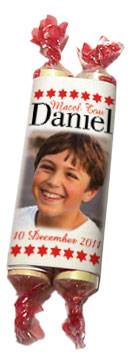
In 2006 my congregation, United Hebrew Congregation in St. Louis Missouri, undertook a very special project – writing a new torah scroll.
Our primary scroll (the not-too-heavy, not-too-big one) was nearly 200 years old and practically beyond repair. So we set out to have a new one written.
What a wonderful opportunity it was for our congregation. There is much to learn through the process, and Neil Yerman, a teaching scribe from the New York area was hired to shepherd us through the process.
My youngest son, Jordan, was 12 years old at the time. So he was preparing for his bar mitzvah. It’s a tradition at U.H. for kids to undertake a “mitzvah project” in conjunction with their bar mitzvah. The project is typically a charitable effort to benefit the community in some way.
Since Torah Alive was in full swing, Jordan decided to make little torahs out of candy with slogans and artwork to help promote the project.
Torah Alive reached into every corner of our congregation. It was a major fund-raising program (sponsor a book, a passage, a phrase, a word or even a letter), and Sofer Yerman visited throughout the year to lead educational programs for our seniors, religious school students, confirmation students, clergy, many committees and our brotherhood and sisterhood.
And Jordan wanted to make these candy torahs available at every planning meeting, presentation, writing session and oneg Shabbat throughout the year.
In doing so, a few things happened. First, we made about 2,000 favors! Second, we got pretty good at it and third, we realized that everyone loved them!
Thus, CandyTorahs.com was born. I was able to leverage my personal interests and skills to developing the business. Marketing, website development, production process design and improvement (Lean, 6-sigma): these are all things I enjoy and do well. We offer a few kinds of candy and have added place cards to the mix. Business has been good; we ship hundreds of orders each year around the country and the world.
But the big payoff lies elsewhere.
I get such a warm feeling working with these dedicated parents who are so proud of their kids they could burst. They want everything to be perfect – not in a neurotic way, but in a loving way. And being a part of that special time in their family is what it’s all about!
New Jewishdating website TheJMom
proves mom’s really do know best
By Cheryl Jacobs
Siblings andChicagoans Brad and Danielle Weisberg were checking out a dating website one day last year. When Brad left to run errands, their mother, Barbara, also in the room at the time, asked if she could sift through profiles for him in his absence. By the time he returned a couple hours later, Barbara had jotted down a list of 10 Jewish women’s screen names for him to contact. It turned out he was impressed by many of the profiles his mother chose. “My mother had put more effort and time into the process than I ever could or would and she enjoyed doing it,” said Brad.
Coincidentally that same week, they learned that their cousin Michael had proposed to the girl their aunt Elaine had set him up with and they thought, hmmm… maybe there was something to this matchmaking mother concept. Maybe moms know something we don’t?!
With those first few Ah-Ha moments, the idea for a different kind of Jewish dating website— TheJMom.com— was born. A site for Jewish moms—or any close relative or friend—to match their single children up on dates with other Jews.
While some of you may be thinking at this point, that this must be the set up for a bad Jewish joke, entrepreneurial-minded Brad and Danielle knew they were onto something.
“Who cares the most about your happiness and knows you best, better than you sometimes know yourself?” said Danielle.
“Here’s how the site works: A parent—or another relative—writes a profile, including information and a photograph of their child and information about their family as well,” said Brad. “Then, if the parent spots a potential set up, they contact the parent of the potential date. Once both parties agree to set up their kids, the profiles are emailed to their children. The kids then take it from there and can choose whether or not to email their potential match.”
Brad and Danielle’s hard work is starting to pay off. In the little over a year since the site launched, more than 2,100 moms have joined the site and more than 5,000 messages have been sent. There’s even been one marriage!
“We could not have been any happier when we heard the big news,” said Brad.
“This was such a huge moment for us,” said Danielle. “Our first marriage! We knew we were on to something!.”
“When we
first launched, we used to say, ‘If we can match up 100 people and
we get one marriage out of that, we’ve done our job,’ said Brad.
“Now we want to get 100’s of marriages!”
For
more information and to sign up for TheJMom, visit www.thejmom.com
Benny Rogosnitzky keeping alive the Cantorial Music
By Jack Edward
Benny Rogosnitzky was found by one of the greatest Cantor of his time Johnny Gluck. Benny started his career as soloist with cantor Gluck. Benny as a young boy at that time had beautiful voice and his delivery of notes was flawless they say several people would collect to see him performing.
Cantorial Jewish Music with a glitter of a genius is what Benny Rogosnitzky is called. Born in Liverpool, England, Benny has worked with some of the world renowned cantors. Experienced in the classic Jewish Chazzanut Music and traditional chazzonus Benny is an experienced campaigner bring music to spiritual singing.
Cantor Benny is a capable of performing huge variety of inspirational oration. His one of the memorable performance of Memorial Concert Riverdale Jewish Center is often recalled, besides Benny also recorded his first CD for High Holiday Music.
Benny did his Masters Degree in Music from the Royal Manchester School of Music and Art. He had this passion for music; he went on to conduct a concert at High Holiday Services at the prestigious Brighton and Hove Synagogue. It was in the year 1996 that Benny Rogosnitzky was chosen as the senior cantor of the prestigious Jewish Center on the Upper West Side, he served here for 13 years.
Cantor Benny is a creative composer and a gifted teacher. During his career Benny has carried out various concerts with the likes of other great Orchestras in the world. Having traveled throughout the length and breadth of the USA and Europe he served as a guest lecturer at the Yale Conservatory of Music in the USA. Popularly known as "Cantor Benny,” he also lectured on the practice of tradition on liturgy and modern music.
In association with Charlie Bernhaut he started 'Cantors World’ in the year 2003. This was intended to encourage and preserve the conformist chazzonus with better programs. Benny in save the beauty and intensity of the religious services initiated a choir band under ‘Cantor World’. As the founder of ‘Cantor World’, Benny Rogosnitzky regularly participates in cantorial events. Ever since he became a Cantor, Benny’s contribution to the various causes including congregation religious and educational activities has grown vastly.
For more details about Benny Rogosnitzky you can visit Benny Rogosnitzky. Also you can visit Benny Rogosnitzky
Becoming Jewish - Finding the Right Jewish Community for Your Needs
By Chaim Coffman
One of the most important decisions a prospective convert needs to consider while in the process of becoming Jewish is in which community to put down roots.
One factor that makes a Jewish community most user-friendly to the convert is a nice mix of religious Jews of various types. This will allow for more acceptance of someone coming from the outside and it will give a person the chance to explore different sub-communities within the larger Jewish community.
Another important factor should be the number of Orthodox synagogues and schools in the area. This is very important because an Orthodox convert will want to reside in a place that has a flourishing Orthodox community. There have to be schools and other synagogues to meet those criteria.
One cannot underestimate the importance of Jewish outreach in a community as well. The reason this is an important aspect while looking into an Orthodox community is because the outreach director will want to try and help the prospective convert as much as possible or send that person to someone that can. A prospective convert should also do research to see if a rabbi of a particular synagogue has experience dealing with converts or those in the process of becoming Jewish.
This can be a major plus, as not all rabbis have this expertise.
Even if the prospective Orthodox convert finds a community to live in, he/she should keep an open mind when dealing with members of that particular community. The reason is that many communities are skeptical of converts even after conversion!
The reason is that throughout Jewish history converts have not given the Jewish people a great name and have at times caused serious harm. Therefore, many communities are skeptical of all converts making the process even more difficult.
Even though there may be new surroundings and people might not always be so friendly, this is part of the test for the potential Orthodox convert. Once members of the community see that one is persistent and will do whatever it takes to finish the process, they will be more accommodating and accepting.
When looking for an Orthodox Jewish community, the prospective convert needs to know the religious standards of that community and where they stand vis-à-vis those standards.
It will be a big mistake to move to a community where the potential convert does not abide by the standards set up by the community itself.
Even though you will feel like an outsider in the beginning, it is very important that the prospective Orthodox convert make every effort to fit in. This will make the acclimation to the new environment a pleasant one. When you move into a community, you will soon see that the effort to be a part of the Jewish people was well worth it.
Finally you will be able to see how others observe Judaism and turn your book knowledge into a reality. Having a place to pray and learn makes the integration process easier as well.
Although the process of becoming Jewish may be daunting, one who perseveres will be rewarded with a life full of spiritual growth and meaning.
It may take some time to find the right community for you, but it is worth spending some time in different places if possible to find the right fit the first time.
But nothing is set in stone, and especially in this day and age it is common for people to move around due to jobs etc. So don't worry about making a mistake.
The best thing you can do for yourself is to find a mentor who can guide you in the process of finding the right Jewish community for you.
Rabbi Chaim Coffman has years of experience guiding conversion candidates successfully through the process of Orthodox conversion Judaism.
Visit his blog at http://rabbichaimcoffman.blogspot.com
Article Source: [http://EzineArticles.com/?Becoming-Jewish---Finding-the-Right-Jewish-Community-for-Your-Needs&id=5685823] Becoming Jewish - Finding the Right Jewish Community for Your Needs
Rabbi Yitzhak Miller the Cyber Rabbi
Author: Prabhat786
Connecting. Caring. Understanding. Empathizing. Being a mensch. These are the hallmarks of being both a good Rabbi and an effective Rabbi.When Rabbi Yitzhak Miller set out to use 21st century technology to reach both Jews and people interested in Judaism, the greatest challenge was not the webcams or video-conferencing; not how to provide Jewish Education classes or guidance for people exploring
Conversion
to Judaism; not how to provide
Bar Mitzvah lessons or Bat Mitzvah lessons; not how to be a Rabbi for a wedding or officiate a baby naming ceremony.No, the greatest challenge of being a "CyberRabbi" is how to not only utilize, but to transcend the technology-to truly be "in contact." The old ad used to say "Reach out and touch someone." That's the goal here: to touch hearts, minds, and souls, not only in person, but by phone, webcam, or video conference-and to use every tool available to connect people to each
other.Providing services is easy; connecting with people is not. Rabbi Yitzhak Miller's website contains an array of useful information about Judaism-whether someone is looking for a wedding Rabbi or a Rabbi for a Bar Mitzvah or Bat Mitzvah; whether they're having an interfaith wedding or a Jewish wedding; whether they seek Jewish Education or Spiritual Counseling; whether they want to study Mussar, Jewish Philosophy, Jewish History, or Jewish Theology; whether they have a bris coming up or they're considering
conversion to Judaism.As he says in his introductory video-there are two things that are more important than any other piece of information on the website-Rabbi Yitzhak Miller's phone number and email address - 831-594-YITZ and RebYitzi@yahoo.com. Why are these the most important? Because whether you're looking for Bar Mitzvah tutoring or Bat Mitzvah tutoring; ideas for a mitzvah project or a holocaust project; an interfaith Rabbi or a wedding officiant; Torah learning or Basic Judaism-all of these services start
with one fundamental thing-a connection. Whether Synagogue Rabbi or CyberRabbi, connecting with the community is what it's all about. Rabbi Yitzhak Miller's work shows that even for a 4000-year-old tradition, the web is a powerful and effective tool, but just that-a tool. Anchoring these tools with the soul of a Rabbi-no matter what the technology-that remains the key. It's amazing how little changes over the years...
For questions, contact Rabbi Yitzhak Miller at RebYitzi@yahoo.com
Article Source: http://www.articlesbase.com/cable-and-satellite-tv-articles/rabbi-yitzhak-miller-the-cyber-rabbi-449613.html
About the Author: I am a programmer
The History of Krav Maga
Krav Maga is a fairly new martial art and form of self defense, as it was created during the early to mid 1930's. It was originally formed in Czechoslovakia and Hungary by a man named Imi Lichtenfield (he was also known by the name Imi Sde-Or) and later was developed in Israel by the Israeli military. It was first taught in Bratislava, however, to help teach the Jews how to defend themselves against
the raging Nazi military.
Around the year 1948, the State of Israel was created and Imi Sde-Or was named the Chief Instructor of Physical Fitness and Krav Maga and taught the form of martial arts to students who would later become members of the Israeli Defense Forces. Sadly, Imi Sde-Or died during the year 1998 after about 20 years of faithful service.
It
was not until around the year of 1980 that Krav Maga began to find a place outside of Israel. Because of its Jewish link, when six masters traveled to the United States to help spread the martial art, it was first and foremost taught in centers for the Jewish community.
It is a fact that Krav Maga is an extremely unique and functional martial art and because of this, it found its way into American military and law enforcement tasks as well. These six instructors went
back and forth between America and Israel to help bring about several schools to help get the art set up permanently.
As Krav Maga developed into more of a martial art and a sport rather than a mere form of self defense, authorities had to devise a system to help establish ranks. While some forms employ a traditional belt system (with the traditional colors of yellow, orange, green, blue, brown and black), most older forms employ a patch ranking system instead. With this type of ranking, there are four major
categories: Practitioner, Graduate, Expert and Master. In the first three categories, there are five levels in each and in the fourth category, there are three levels. This creates a total of eighteen levels in traditional Krav Maga.
Since the founders taught different forms of the martial art to military and law enforcement personnel, it was only fair that a different ranking system be used for them as well. The general idea is the same, however, the military categories are known as Fighter, Warrior and
Operator.
Regardless of the particular style of Krav Maga, however, one thing is for certain, it is one of the most brutal known forms of self defense available today. Because the Jewish community were learning self defense to help them fight against the Nazi in the 1940's, Imi Sde-Or had to create something both vicious and effective or all would have been lost. Krav Maga stresses fighting in the worst possible scenario, often students will practice to extremely loud music or strobe lights to help them tune
out external stimuli and to teach them to focus on the fight. This too stems from the original purpose of Krav Maga. Its origins make Krav Maga one of the most useful martial arts known today.
Read more: http://www.articlesbase.com/sports-and-fitness-articles/the-history-of-krav-maga-179983.html#ixzz0t24ZyLbr
Under Creative Commons License: Attribution
James Dunn - About the Author: James Dunn owns and opperates Martial Arts Tutor Visit Krav Maga Lessons for more information about Krav Maga or Kickboxing Lessons to learn about Kickboxing.
Lot’s of Fun with Yiddish Words
By Neal Walters | December 29, 2009
While Sephardic Jews are known for Ladino, a mix of Spanish and Hebrew, Ashkenazi Jews are known for their language, Yiddish, which goes back to the 10th or 11th century in the Rhineland. It spread to central and Eastern Europe, and then to America and anywhere Ashkenazi Jews have settled. Besides Hebrew and German, Yiddish also borrows words from both Russian and Polish.
Today it’s called “Mame-loshen” which literally means “mother-tongue”, as opposed to “LASHON KODESH” (or LOSHEN KOYDESH) – the “Holy Tongue”. “LASHON” is the Hebrew word for “tongue” or “language”. “MAME” is obviously a cognate for “MAMA” or “Mother”. Yiddish is written in Hebrew letters.
The English language has absorbed dozens of Hebrew and Yiddish words into the English language. For example, shlep (carry something burdensome), shalom (peace/hello), and shnook (a dolt).
Let’s now dig into several interesting Yiddish phrases. Es iz a shandeh far di kinder! = It’s a shame for the children. Onegeblozzen means conceited, but ongepatshket means cluttered or muddled.
Words like “Milchiks”, “Flaishik” and “Pushkey” are specific to Judaism, “Milchiks” (similar to our word “milk”) refers to dairy foods and cooking utensils (as Jews separate meat from milk). On the other hand, “flaishik” means “meet” foods (compare to the English word “flesh”). A “Mechalel Shabbes” is one who works on or violates the Shabbat rest. —
Several phrases begin with “OY”. “Oy Vey” is a famous saying that means “Dear me”. Another is “Oy gevald”, a cry of anguish, and yet another is “Oy a shkandal” means “What a scandal!”
The word “NIT” is a cognate of our word “NOT”. “Nit gidacht!” means “It shouldn’t happen”. “Nit heint, nit morgen!” means “not today, and not tomorrow.” Simlary, “NISHT” is another word that means “no” or “not”, as in “Nisht Naitik” (not necessary).
Some of the “SH” words are interesting. A “shnorrer” is someone who is a parasite, always glad to ask for money. A “shtarker” is a tough guy, and to “shushkey” means to whisper or gossip. A “shvegerin” is a sister-in-law, and to “shvindel” means to “swindel” or fraud.
Last but not least, here are some “Z” words and phrases. “Zindit nit” = “Don’t complain”. “Zitsen ahf shpilkes” means “sitting on pins and needles” or “fidgety”. You probably guess the “Shpilkes” is similar to the English “spikes”. Probably one of the funniest phrases is “Zol vaksen tzibbelis fun pipek” – which means “Onions should grow from your navel!”.
Neal Walters offers Yiddish and Hebrew products. Visit his Beginning Hebrew website (http://HebrewResources.com) for more information.
Article kindly provided by UberArticles.com
Topics: Self Improvement | No Comments »
Disclaimer
Uber Articles and its partner sites cannot be held responsible for either the content nor the originality of any articles. If you believe the article has been stolen from you without your permission, please contact us and we will remove it immediately. If you have a problem with the accuracy or otherwise of the content of an article, please contact the author, not us! Also, please remember that any opinions and ideas
presented in any of the articles are those of the author and cannot be taken to represent the opinions of Uber Articles. All articles are provided for informational purposes only. None of them should be relied upon for medical, psychological, financial, legal, or other professional advice. If you need professional advice, see a professional. We cannot be held responsible for any use or misuse you make of the articles, nor can we be held responsible for any claims for earnings, cures, or other results that the
article might make.