Jews On The Web
Help others find this website: Digg It! or Bookmark it! Share
























Jewish Weddings
* Christopher Jarecki married Alicia Silverstone
* Alisan Porter and Brian Autenrieth
* Lisa Loeb and Roey Hershkovitz
* Drew Barrymore and Will Kopelman
* Seth Rogen and Lauren Miller
* Chelsea Clinton and Marc Mezvinsky
* Rob McElhenney and Kaitlin Olson
* Sacha Baron Cohen and Isla Fisher
* Zoe Winkler wed Robert Reinis
* Adam Sandler and Jackie Titone
* Marla Sokoloff and Alec Puro
* David Benioff and Amanda Peet
* Coco Lee and Bruce Rockowitz
* Ivanka Trump and Jared Kushner
* Christina Aguilera and Jordan Bratman
* Mayim Bialik and Mike Stone
* Jason Goldberg married Soleil Moon Frye
* Mardy Fish and Stacey Gardner
Famous Jewish Women
ALETTA JACOBS was the 1st female physician in the Netherlands in 1878.
HENRIETTA SALD was the founder of Hadassah in February of 1912.
REGINA JONAS was the 1st ordained rabbi. She was ordained in East Berlin in 1935.
JUDITH RESNICK was the 1st female Jewish astronaut. (Unfortunately, she died aboard the Challenger in 1986.)
Gloria Marie Steinem is considered to be a major icon of the Feminist Movement of the late 1900's. Pro or con of her beliefs, Ms. Steinem has greatly influenced the role of women, their sexuality, and their career/ educational options.
Jewish Nobel Prize Winners
Over 15% of Nobel prize winners have been Jewish. Quite an accomplishment
considering the % of Jews in the world.
Some of these include:
Ada Yonath (2009) * Elie Wiesel (1986)* Paul Krugman (2008) * Herbert Spencer Gasser (1944) * Emilio Segrè (1959) * Nadine Gordimer (1991) * Gertrude Elion (1988) * Rene Cassin (1968)
Film looks at Jewish experience
Author: kitty
Over the course of 140 years, there have been more than 16,700 Major League Baseball players and of that talented group 160 of them have been of the Jewish faith. The new documentary "Jews and Baseball: An American Love Story" tells the story of Jewish immigrants who came to America at the turn of the last century and learned what it meant to be Americans by embracing the sport of baseball.
"This is the project I had been waiting to do my entire life, buy MLB Jerseys on Ujersy." said Peter Miller, a longtime collaborator with famed documentary filmmaker Ken Burns. Miller co-produced "Jews and Baseball" with Canadian producer Will Hechter and directed the film. "This was looking at the experience of Jews in America looking through the lens of baseball -- which was America's most iconic cultural
institution.
"Baseball is a way in which Jews became American. In a way, baseball was a way to overcome the vicious bigotry that was used against them and this was a story of people finding their way into the mainstream and baseball was the route."
The film covers baseball's earliest days in which Lipman Emanuel Pike, a Jewish player of Dutch origin, led the American League in home runs its first three years of existence, 1871-73, with four, seven and four home runs, and Erskine Mayer, who won 21 games for the Philadelphia Athletics in 1914 and 1915. But despite the success of these players, the stereotype of the 2 million Jews that fled Eastern Europe and came to America between 1881 and 1924 was that of non-athletic, more cerebral type.
"You're not supposed to be a ballplayer if you're Jewish," said former White Sox pitcher Marv Rotblatt in the documentary. "If you're Jewish, you're supposed to be an attorney or a doctor."
Recommend directory: Atlanta Braves Jerseys, But that started to change in the early 1930s when New York-born Hank Greenberg came on the scene for the Detroit Tigers. Greenberg had been wooed by his hometown New York Yankees, but with Lou Gehrig entrenched at first base, Greenberg signed with Detroit and immediately helped the Tigers challenge for the American League pennant in 1934. An important part of the film focuses on the decision
Greenberg had to make that season about playing baseball during the Jewish high holy days of Rosh Hashanah and Yom Kippur.
In a 1984 interview that was used in the documentary, Greenberg, with the blessing of his rabbi, played on Rosh Hashanah, hitting two home runs in a 2-1 victory over the Red Sox, but 10 days later, Greenberg did not play against the Yankees and instead went to temple in observance of Yom Kippur, making him a true hero to American Jews.
"By not playing on Yom Kippur in 1934 and almost breaking Babe Ruth's single-season home run record in 1938, he helped change the way people perceived American Jews," said Miller.
Al Rosen of the Cleveland Indians, who is interviewed in the documentary, would become another Jewish player who would help break down stereotypes by winning the American League MVP Award in 1953 with 43 home runs and 145 RBIs. Sandy Koufax, who joined Greenberg in the Baseball Hall of Fame as one of the greatest pitchers of all time for the Dodgers, also granted a rare interview for the film.
"As Commissioner Bud Selig said in the documentary about Koufax, 'There's a pride factor involved,'" said author Ira Berkow, who wrote the film's script. "I think overall there was a pride factor in how people like Greenberg, Rosen and Koufax comported themselves, and I think they felt a responsibility and/or obligation to Jewish people in general to handle themselves in the public eye in a respectful way."
"I was honored to be a part of 'Jews And Baseball: An American Love Story,'" said Selig, who, along with Mets owner Fred Wilpon, spoke about Jewish team ownership in the game as owner of the Milwaukee Brewers before becoming the game's Commissioner. "One of the great virtues of baseball is that it draws from cultures around the world, all of which make special contributions. Our game is fortunate that so many remarkable Jewish figures, such as Hank Greenberg and Sandy Koufax, have left a legacy
that will resonate forever. I hope the film will serve not only as a celebration of the Jewish players who have been critical to our game's unparalleled history, but also as a reflection of the remarkable times in which they lived."
Another big name associated with the documentary is two-time Academy Award-winning actor Dustin Hoffman, who narrated the film after a great deal of coaxing from the director.
"Dustin does not narrate films, generally," said Miller. "We asked and he said, 'I don't normally narrate films, that's not the kind of actor I am,' but then he looked at our rough cut of the film after we called him 30 or 40 times and he said, 'Oh, this is about bigotry and overcoming anti-Semitism, about discrimination and these issues that I grew up with, that really matters to me,' so he agreed to do it."
Recommend directory: Colorado Rockies Jerseys, The filmmakers hope the documentary helps entertain and educate people of all religions that a simple game played on street corners, in cow pastures and in great baseball stadiums can impact an entire culture of people and help them feel more a part of something very special.
"I hoping that audiences learn something about the history of America," said Miller. "Not just the Jewish experience in America, but what our country can be and ought to be. We can be a place and should be a place that welcomes everyone that can hit, run, pitch and play the game, should be a part of our American game.
"Jews and Baseball: An American Love Story," released by Seventh Art Releasing, is currently playing in New York and opens in Los Angeles and Kansas City beginning Friday and other cities in the coming weeks. The DVD version should be available in the spring.
Article Source: http://www.articlesbase.com/baseball-articles/film-looks-at-jewish-experience-3693532.html
About the Author
http://www.ujersy.com provides over 100,000 products worldwide wholesale, including NFL, MLB, NBA and Soccer, most of which cost less than $19. Welcome to purchasing
ISRAELI WEBCAMS
Enjoy these views from Israel!
Incluidng the Wailing Wall and the Sea of Galilee.
Assorted Israeli Webcams
The Wailing Wall
The Sea Of Galilee
NEWS & TRIVIA
Jewish-related news not easily found elsewhere,
as well as trivia.
“I’m Jewish, I’ve had to deal with Anti-Semitism” Mark Cuban give thoughts on Kyrie Irving - Click here.
Ukraine's Jews remain resilient
amid Russia invasion threat Click here.
MLKs' Jewish Connection
MLK Day 2020: What to know about the civil right icon's legacy (ABC News)
Honoring Jewish Veterans
GI JEWS: Jewish Americans in World War II
In New York's Hasidic Jewish community, a socially distant wedding | AFP
Click here.
COVID-19: What Older Adults
Need to Know
Click here.
We have lost a great music innovator at the age of 52.
May G_d watch over David Berman of the Silver Jews.
(As well as his family and loved ones.)
Check out this Rolling Stones piece regarding this popular musician.
Touro Synagogue: Original symbol of religious freedom
CBS News
A (Troubling) Sign of Our Times
In Texas, multiple parents were asked to provide proof of their child/children were attending Yom Kippur services. After protesting by at least one mother who contacted a principal and the school district, she received apologies. But this should not have happened. In our very divisive nation where bigots feel free to show anti-semitic, racist, and homophobic views, one can wonder why this occured. Especially when this never happened before.We must be extra vigilent.
The rabbi who spoke out for civil rights in America
Frederick Irving
This man was a scholar. A pilot during WWII who was captured and tortured, and A man who knew that peace was needed, worldwide so that wars would never again need to be fought. Mr. Irving became a diplomat and eventually a U.S. Ambassador.
He was also a devoted husband, father, gandfather, brother, and uncle.
His passing is mourned by many.
In his own words: http://www.yiddishbookcenter.org/collections/oral-histories/interviews/woh-fi-0000257/woh-fi-0000257
The U.S. tragedies involving
racism and hatred.
Given the great tragedies in America, this week,
involving both individuals whom police shot and killed,
as well as police officers who were killed,
may we all pray for an end to bigotry and violence.
Please let us know what if anything
you or your congregation is doing/planning on doing,
as a result of these terrible events.
Send the information to: Admin@JewsOnTheWeb.com
We have lost a great voice in Elie Weisel.
Celebrating Israel's '68th Birthday'
68 Facts You Probably Didn't Know About Israel
www.youtube.com/embed/i3wmT2wH690?version=3&hl=en_US
68 sentences about Israel
www.youtube.com/embed/o-gn812Tp9A?version=3&hl=en_US
The following is a Press Release by the ADL (Anti-Defamation League)
ADL Calls on Ted Nugent to Remove
Facebook Post Targeting Prominent Jews
for Supporting Gun Control
New York, NY, February 8, 2016 … The Anti-Defamation League (ADL) today condemned a Facebook post by rock musician and gun rights activist Ted Nugent suggesting that prominent Jewish Americans are behind the advocacy for stronger gun control laws.
Earlier today, Nugent shared a graphic titled “So who is really behind gun control?” on his Facebook page. The visual featured thumbnail photos of prominent Jewish Americans, including former New York City Mayor Michael Bloomberg, Senator Chuck Schumer, Chicago Mayor Rahm Emanuel and Harvard professor Alan Dershowitz and several others, with each photo emblazoned with the Israeli flag.
The post was accompanied by a written message from Nugent: “Know these punks. They hate freedom, they hate good over evil. They would deny us the basic human right to self defense & to KEEP AND BEAR ARMS while many of them have tax paid hired ARMED security! Know them well. Tell every1 you know how evil they are.”
The visual was apparently not created by Nugent, but has appeared in the past on anti-Semitic web sites.
Jonathan A. Greenblatt, ADL CEO, issued the following statement:
Ted Nugent has a long history of being an equal opportunity offender. But his latest share on Facebook, making the outrageous suggestion that Jews are behind gun control, is nothing short of conspiratorial anti-Semitism. Regardless of one’s views on gun control, this kind of scapegoating of an entire religious group is completely unacceptable and completely divorced from reality.
It should go without saying that anti-Semitism has no place in the gun control debate. Nugent should be ashamed for promoting anti-Semitic content, and we hope that good people on both sides of the gun control debate will reject his tactics and his message. We hope that Nugent will have the good sense to remove this share immediately so that it does not spread virally across the internet.
In January 2014, ADL spoke out after Nugent made public remarks comparing film producer Harvey Weinstein to Hitler’s chief propagandist, Joseph Goebbels, charging that Weinstein was out to “destroy the NRA.”
The Anti-Defamation League, founded in 1913, is the world's leading organization
fighting anti-Semitism through programs and services
that counteract hatred, prejudice and bigotry.
Cantor Ari Schwartz sings Jewish prayer of fallen
www.youtube.com/embed/EQ6QItyQnGY?version=3&hl=en_US
Rosenberg Brother Lied?
Innocent Woman Executed?
Michael Douglas Speaks Out About Anti-Semitism
Anti-semitism does not pass someone over because they are from a famous family.
Michael Douglas wrote an op-ed article for the Los Angeles Times newspaper in which he describes his son Dylan's first 'real' experience with anti-semitism.
While on vacation in Europe, his son entered their hotel room rather upset. Apparently, a man at the swimming pool had been more than insulting to him.
Michael went down to the pool to determine whether or not Dylan had been rude and caused the incident. But, Douglas soon learned from his conversation with the man, that the other person was rather anti-semitic. (And, Dylan had been wearing a Star of David, when at the pool.)
Later, Dylan learned about his dad's first known encounter with anti-semitism, when he was in high school.
Douglas points out in his op-ed piece that anti-Jewish sentiment is rampant and must not be allowed to continue.
A Request To Help Others With Little Effort
The arrest of a Georgetown rabbi for voyeurism. He is accused of setting up a hidden camera and filming women in the mikvah.
How did such a pious man do something so terrible? Well, for starters, he is innocent until proven guilty.
But, his arrest brings up a serious topic: Crimes and sins perpetrated by Jews. The truth is that every religion, race, and thnicity has people who are good and bad.
That said, I would like to bring your attention to a very serious trend among young people. (And, I am afraid, also among adults.)
The matter is that of Dating/Breakup/Domestic Violence.
To that end, I ask you to share the following article, You Do NOT Deserve It!
Dating/Domestic/Breakup Violence, found here at TeensImproveYourLife
High Holy Day Tickets Required?
A common debate among Jews revolves around the topic of High Holy Day services: Should paid-for tickets or synagogue membership be required in order to attend?
Part of me understands that there are many expenses that are involved in maintaining a temple. There is a mortgage, perhaps, insurances, utilities, staff salaries, supplies, maintenance, and more. Without allowing for 'open access' to the services, too many (potential) congregants might not pay the dues necessary for this upkeep.
On the other hand, there are many Jews who do not fit the stereotype of being wealthy. Whether due to unemployment, health, low wages, or... They cannot afford synagogue membership or even the price of High Holy Day-only tickets (where they are available), They also have pride and do not wish to humble or embarrass themselves by asking for what they perceive as charity or to go through what is often a humiliating process.
All things considered, I believe in my heart of hearts that there will be those with sufficient funds to make up the 'deficit' caused by those who do not get regular, paid for tickets. And, I believe that all Jews who wish to ocme together, especially during the High Holy Days, should be allowed to attend.
Following is a video by one of hopefully many temples around the world that will allow anyone to attend services.
www.youtube.com/v/9uHzQM2bWy4?hl=en_US
We at www.JewsOnTheWeb.com will have our yearly
Directory of streaming or broadcast High Holy Day services,
within the next few days. Check back! And share it with others!
(Let us know what you think about this topic.
Email us at ThoughtsPlus@JewsOnTheWeb.com )
Disturbing Anti-Semitism, Worldwide, Revealed
Outrageous! A study of over 50,000 adults, worldwide, has revealed some very disturbing facts. Many. Far too many people have either never heard of the Holocaust or believe that it's extent has been greatly exaggerated.
Close to 10% of Americans surveyed belive at least 6 jewish stereotypes.
Please refer to this Anti-Defamation League report.
Yom Haatzmaut 2014: 66 Israeli Heroes
Share a Powerful Message
www.youtube.com/v/voO3DXnPc-U?hl=en_US
PM Netanyahu's Greeting for Independence Day 2014
www.youtube.com/v/voO3DXnPc-U?hl=en_US
H&M and a Revolting Shirt
If you find this as offensive as we do, then let the company know! By your words and perhaps by taking your business elsewhere!
http://living.msn.com/style-beauty/fashion/handm-pulls-controversial-shirt
www.youtube.com/v/cvB3K_2BGOM?version=3&hl=en_US
www.youtube.com/v/GFGXzdhtCAM?version=3&hl=en_US
Please support a unique film project!
Kickstarter is a unique and respected crowdfunding service. It allows 'average folks' to supporte xciting projects in the arts, technology, religion, and more.
From The Four Corners of the Earth is a film project designed to follow a journey of discovery by Sefwis. Sefwis live in Ghana and have been practicing a religion for centuries. Unbeknowst to them until the past 20 years or so, they were, in fact, practicing Judaism.
Please read more about this project and how you can support it. And, share this knowledge with others!
Visit their Kickstarter page here.
UNIVERSITY APOLOGY
TAKES DECADES
Vindication at last!
For who? For the dozens of Jewish dental school students who attended Emory University from 1948 - 1961. these students were discriminated against by John Buhler who was the dental school's dean, back then.
What form did the discrimination take? Well, some of the Jewish students were required to repeat classes while others were flunked out. Additionally, there was a quota for Jewish admissions. (Approx. 4 students per year.)
Emory University had, interestingly, made inroads for admitting blacks, during this time.
In 1961, the dean, Buhler, resigned and Emory denied that it was due to anti-semitic accusations.
Dr. Perry Brickman, one of the victims, graduated with honors from the University of Tennessee’s own dental school. - In 2006, when he went back to Emory in order to check out an exhibit hoonoring their Jewish studies program, he was asked to help bring the anti-smitism history to 'closure'. Dr. Brickman ended up interviewing other students from that shameful era. - Mr. Hauk, a university vice president, hired a duo to create a film utilizing Dr. Brinkman's interviews and others that were conducted with Emory University staff.
Ultimately, James Wagner, Emory University's president, apologized to some of the affected students, now, senior citizens.
Perhaps, it was decades late, but kudos to Emory University for finally, publicly admitting to and apologizing for their horrible, past conduct.
12 million Chair in Jewish studies at Stanford University reconstituted by Peter Menkin
By: Peter Menkin
A Chair in Jewish studies has been reconstituted at Stanford University's School of Education where doctoral students will pursue culture, history, language, and all the elements that constitute the Jewish faith of which religion is a salient feature. So notes one authority involved with the $12 million dollar endowment. The San Francisco-based Jim Joseph Foundation construes education broadly: camps, youth groups, Jewish service learning, and trips to Israel. Doctoral students will learn about the religion of the Jewish people in America. That is part of the Jim Joseph Foundation charter, to provide the American Jewish community with education. The Executive Director of Jim Joseph Foundation, Charles Mark Edelsberg, Ph.D. notes: "Only one other  major research university in the U.S. currently offers such a program: NYU—which the foundation also supports. "This program of study enables students to examine Jewish history, culture, language (Hebrew), and literature as well as Judaism's dynamic forms of religious observance. It is not a religious studies degree but a PhD in education and Jewish Studies. It will admit two students per year for the first three years of the program and then will ramp up by one additional
student per year afterwards to reach a total of seven." "The foundation selected Stanford for this award because of its college of education's stellar reputation. Stanford also features a robust graduate program of Jewish studies. The scholarship of the Stanford faculty—both in education and Jewish studies—is formidable.' "What makes this renewed concentration unique is its broad, all-encompassing approach to education," said Dr. Jonathan Sarna, the Joseph H. and
Belle R. Braun Professor of American Jewish History at
major research university in the U.S. currently offers such a program: NYU—which the foundation also supports. "This program of study enables students to examine Jewish history, culture, language (Hebrew), and literature as well as Judaism's dynamic forms of religious observance. It is not a religious studies degree but a PhD in education and Jewish Studies. It will admit two students per year for the first three years of the program and then will ramp up by one additional
student per year afterwards to reach a total of seven." "The foundation selected Stanford for this award because of its college of education's stellar reputation. Stanford also features a robust graduate program of Jewish studies. The scholarship of the Stanford faculty—both in education and Jewish studies—is formidable.' "What makes this renewed concentration unique is its broad, all-encompassing approach to education," said Dr. Jonathan Sarna, the Joseph H. and
Belle R. Braun Professor of American Jewish History at
Brandeis University. "SUSE and the Jim Joseph Foundation understand that Jewish education encompasses issues of nationality, peoplehood and culture, as well as religion; that Judaism is a broad civilization embracing both secular and Jewish elements."
In a statement, Stanford University says: "Through this generous gift, Jim Joseph Foundation is helping to pioneer a new paradigm for thinking about the intersection
of religion and education," says Sam Wineburg, the Margaret Jacks Professor of Education and of History, who led Stanford's effort. "We're putting our energy into the intersection of education and Jewish studies because Stanford has a record of success in this field and because there's a need to produce more scholars with this background. The impact of this significant JJF gift will be broadly felt. .jpg) More
children across the globe are educated in religious institutions than secular ones. However, we don't yet know, and have not yet begun to properly study, what ramifications this may have for future generations." Faculty in Stanford's School of Education will collaborate with scholars in Stanford's Taube Center of Jewish Studies to create the curriculum for this new concentration. "We truly are embarking on a new era of research and understanding about how religion and education intersect,"
said Professor Vered Karti Shemtov, co-director of the Taube Center for Jewish Studies. "Our center is looking forward to contributing to this new concentration and working with its scholars and students. We have long participated in educating the next generations of leaders in the study of Jewish history, religion and literatures. Thanks to the Jim Joseph Foundation, the new concentration will allow us to train scholars who will influence not only the academic world, but also K-12 education."
In one comment on the subject, Dean and Vice President of the Graduate Theological Union, Berkeley, California Arthur Holder was interviewed by telephone and email on the new Chair and its concentration. Here
More
children across the globe are educated in religious institutions than secular ones. However, we don't yet know, and have not yet begun to properly study, what ramifications this may have for future generations." Faculty in Stanford's School of Education will collaborate with scholars in Stanford's Taube Center of Jewish Studies to create the curriculum for this new concentration. "We truly are embarking on a new era of research and understanding about how religion and education intersect,"
said Professor Vered Karti Shemtov, co-director of the Taube Center for Jewish Studies. "Our center is looking forward to contributing to this new concentration and working with its scholars and students. We have long participated in educating the next generations of leaders in the study of Jewish history, religion and literatures. Thanks to the Jim Joseph Foundation, the new concentration will allow us to train scholars who will influence not only the academic world, but also K-12 education."
In one comment on the subject, Dean and Vice President of the Graduate Theological Union, Berkeley, California Arthur Holder was interviewed by telephone and email on the new Chair and its concentration. Here  is the interview in commentary: Is this a lot of money? That's the level of funding that's appropriate for this kind of program; $12 million is a substantial
amount of funding that will support one faculty chair and fellowship (i.e., scholarship) support, as well as programming such as conferences and seminars. What does a Chair at GTU cost? We'll give readers a comparison. To endow a faculty chair at the GTU would be $2.5 million. But it is not that the whole $12 million at Stanford is going to the faculty chair, since the program includes fellowships and conferences as well. I'm assuming this is an endowment that will produce in the neighborhood
of half a million dollars a year (at 4%). Their required level of funding for a faculty chair is probably more than we would require. Are you surprised that Stanford would be a choice for this Chair? No. Stanford has a strong and well established track record for this kind of graduate program. It is certainly an appropriate place for this kind of study. You have to have a strong school of education and a strong program in Jewish Studies for this kind of concentration.
Who do you think might fill the Chair? Obviously, somebody who is highly competent in both the field of education and the field of Jewish Studies. There will be a research focus for the position, so I'm sure Stanford will be looking for an accomplished Jewish researcher with a background in Jewish Education. How are such chairs and study areas created? This kind of chair comes out of a meeting of two things: One is a donor, in this case, a Foundation [San Francisco's Jim
Joseph Foundation] that has a very strong commitment to a particular topic. Then that topic has to fit within the mission of the university. This has to be a kind of blending. This (Stanford Jewish Studies chair, and concentration) has every likelihood of working. Stanford has done this kind of work before, and they already have a wide range of doctoral areas in their School of Education. If someone comes to a university and says we are going to give you $12 million for a faculty chair in Buddhist studies but
the university is a business school with no established programs in Religious Studies, then that isn't going to work. You have to locate a chair in a university that does the kind of work that the new program is meant to accomplish. In what way does the Jewish Studies' concentration meet the criteria as religious education? Your thoughts, please. Religious education should be just as rigorous, just as sophisticated, and make use of all the educational theory and scientific methods
as any other kind of education. Stanford's new program appears to be a good example of that. Religious education is not a watered down kind of education. It has to be just as sophisticated as public education, for example. It is a good thing to see when a religious community takes the "education" part of religious education just as seriously as they do the "religious" part. Sam Wineburg, Professor at Stanford, played a key role in bringing the $12 million Chair
in Jewish studies into existence. In an interview, he made this statement: Why a "Concentration" and not a "Program" in the School of Education? Students will be admitted into one of the existing SUSE doctoral programs and will take additional coursework allowing them to "concentrate" in Education and Jewish Studies.
is the interview in commentary: Is this a lot of money? That's the level of funding that's appropriate for this kind of program; $12 million is a substantial
amount of funding that will support one faculty chair and fellowship (i.e., scholarship) support, as well as programming such as conferences and seminars. What does a Chair at GTU cost? We'll give readers a comparison. To endow a faculty chair at the GTU would be $2.5 million. But it is not that the whole $12 million at Stanford is going to the faculty chair, since the program includes fellowships and conferences as well. I'm assuming this is an endowment that will produce in the neighborhood
of half a million dollars a year (at 4%). Their required level of funding for a faculty chair is probably more than we would require. Are you surprised that Stanford would be a choice for this Chair? No. Stanford has a strong and well established track record for this kind of graduate program. It is certainly an appropriate place for this kind of study. You have to have a strong school of education and a strong program in Jewish Studies for this kind of concentration.
Who do you think might fill the Chair? Obviously, somebody who is highly competent in both the field of education and the field of Jewish Studies. There will be a research focus for the position, so I'm sure Stanford will be looking for an accomplished Jewish researcher with a background in Jewish Education. How are such chairs and study areas created? This kind of chair comes out of a meeting of two things: One is a donor, in this case, a Foundation [San Francisco's Jim
Joseph Foundation] that has a very strong commitment to a particular topic. Then that topic has to fit within the mission of the university. This has to be a kind of blending. This (Stanford Jewish Studies chair, and concentration) has every likelihood of working. Stanford has done this kind of work before, and they already have a wide range of doctoral areas in their School of Education. If someone comes to a university and says we are going to give you $12 million for a faculty chair in Buddhist studies but
the university is a business school with no established programs in Religious Studies, then that isn't going to work. You have to locate a chair in a university that does the kind of work that the new program is meant to accomplish. In what way does the Jewish Studies' concentration meet the criteria as religious education? Your thoughts, please. Religious education should be just as rigorous, just as sophisticated, and make use of all the educational theory and scientific methods
as any other kind of education. Stanford's new program appears to be a good example of that. Religious education is not a watered down kind of education. It has to be just as sophisticated as public education, for example. It is a good thing to see when a religious community takes the "education" part of religious education just as seriously as they do the "religious" part. Sam Wineburg, Professor at Stanford, played a key role in bringing the $12 million Chair
in Jewish studies into existence. In an interview, he made this statement: Why a "Concentration" and not a "Program" in the School of Education? Students will be admitted into one of the existing SUSE doctoral programs and will take additional coursework allowing them to "concentrate" in Education and Jewish Studies.  Why
would a secular university like Stanford want to get involved in "religious education?" Isn't that advocacy? The study of Jewish education, Islamic education, or Catholic education is a scholarly enterprise similar to the study of bilingual education, multicultural education or science education. The frequency with which the intersections of religion and education have become important problems of policy and practice, both historically and in the present day, makes their careful
study critically important. How can scholars better understand the role of religious education in moral development? How do schools operate when they include curricula that reflect essentially universal and secular values and also curricula that are built on systems of faith and tradition? How is the very act of interpretive reading undertaken when approached devotionally as against analytically? Will religion and its attendant systems of education become venues for
cultivating peace and inter-cultural understanding or occasions for sowing hatred and intolerance? How can religious education be conducted in the context of multi-cultural, pluralistic democratic societies and remain "faithful" both to democratic and religious values? What is the role of religion and religious education in the development of identity, commitment and compassion? The intersection of religion and education touches many fields – from international security and economic
development to questions of identity, community, and affiliation studied by scholars from a range of disciplines. This intersection deserves the serious attention of outstanding education scholars. Why now? There is a new found interest in programs in education and Jewish Studies at our nation's top universities. Michael Steinhart's endowment of the Ph.D. program in Education and Jewish Studies at NYU is the most notable example, but new positions and programs have
been created at some of the leading institutions of public and private higher education: Penn Wisconsin, York (Toronto), Brandeis to name a just a few. One consequence of this development is that there are few faculty qualified to fill these positions. The only major research university in the United States with a track record for preparing scholars of Education and Jewish Studies at the doctoral level is Stanford. We would build on that record. In another Stanford press statement, it's noted:
Dr. Wendy Rosov, a graduate of Stanford's original concentration who is now a private education consultant, collaborated with Wineburg on a feasibility study for the new effort. She was a significant part of the team in bringing the Jim Joseph Foundation to Stanford to endow the Chair and its concentration. "Stanford is a great institution, and we are certain it will attract extraordinary talent and produce scholars who will help to build and lead the field," said Chip
Edelsberg, executive director of the Jim Joseph Foundation. Faculty in the School of Education will collaborate with scholars in Stanford's Taube Center for Jewish Studies to develop the curriculum, offer courses and seminars, and advise doctoral students. It is believed by one reliable source that the work of the Center for Jewish Studies and the college, and the faculty will be animating one another. The Taube
Center is a tremendously rich resource, the source said. Jewish Telegraphic Agency reports: For the School of Education at the prestigious university … the grant is the largest in its history. The grant is large, too, for a foundation that has squarely set its sights on formal and informal Jewish education, comprising probably just less than 10 percent of the foundation's annual grants over the next several years, according to (Jim Joseph
Why
would a secular university like Stanford want to get involved in "religious education?" Isn't that advocacy? The study of Jewish education, Islamic education, or Catholic education is a scholarly enterprise similar to the study of bilingual education, multicultural education or science education. The frequency with which the intersections of religion and education have become important problems of policy and practice, both historically and in the present day, makes their careful
study critically important. How can scholars better understand the role of religious education in moral development? How do schools operate when they include curricula that reflect essentially universal and secular values and also curricula that are built on systems of faith and tradition? How is the very act of interpretive reading undertaken when approached devotionally as against analytically? Will religion and its attendant systems of education become venues for
cultivating peace and inter-cultural understanding or occasions for sowing hatred and intolerance? How can religious education be conducted in the context of multi-cultural, pluralistic democratic societies and remain "faithful" both to democratic and religious values? What is the role of religion and religious education in the development of identity, commitment and compassion? The intersection of religion and education touches many fields – from international security and economic
development to questions of identity, community, and affiliation studied by scholars from a range of disciplines. This intersection deserves the serious attention of outstanding education scholars. Why now? There is a new found interest in programs in education and Jewish Studies at our nation's top universities. Michael Steinhart's endowment of the Ph.D. program in Education and Jewish Studies at NYU is the most notable example, but new positions and programs have
been created at some of the leading institutions of public and private higher education: Penn Wisconsin, York (Toronto), Brandeis to name a just a few. One consequence of this development is that there are few faculty qualified to fill these positions. The only major research university in the United States with a track record for preparing scholars of Education and Jewish Studies at the doctoral level is Stanford. We would build on that record. In another Stanford press statement, it's noted:
Dr. Wendy Rosov, a graduate of Stanford's original concentration who is now a private education consultant, collaborated with Wineburg on a feasibility study for the new effort. She was a significant part of the team in bringing the Jim Joseph Foundation to Stanford to endow the Chair and its concentration. "Stanford is a great institution, and we are certain it will attract extraordinary talent and produce scholars who will help to build and lead the field," said Chip
Edelsberg, executive director of the Jim Joseph Foundation. Faculty in the School of Education will collaborate with scholars in Stanford's Taube Center for Jewish Studies to develop the curriculum, offer courses and seminars, and advise doctoral students. It is believed by one reliable source that the work of the Center for Jewish Studies and the college, and the faculty will be animating one another. The Taube
Center is a tremendously rich resource, the source said. Jewish Telegraphic Agency reports: For the School of Education at the prestigious university … the grant is the largest in its history. The grant is large, too, for a foundation that has squarely set its sights on formal and informal Jewish education, comprising probably just less than 10 percent of the foundation's annual grants over the next several years, according to (Jim Joseph  Foundation chairman, Al Levitt. "This is part of our intention of creating more Jewish educators in the broader sense," Levitt told The Fundermentalist this week. "The idea was to make an important statement about the value of Jewish education. If Stanford doesn't have the best department of education, it is one of top two or three." Rabbi Yitzoch Adlerstein
of the Rabbinical Council of California comments regarding Jewish studies: The notion of a $12 million donation is a delight. It shows there are Jewish givers who are still interested in giving to Jewish causes. There is money around, but it is going to non Jewish causes. It's nice to have a chair and department in Jewish studies. The first question is are there going to be Jews interested in reading the scholarship that is coming out of the department today. When people do consider the overarching
question of Jewish survival, will there be Jews in the next generation, some of us in the Orthodox camp are a bit disappointed that initiatives with demonstrated ability to capture the imagination of programs to capture the imagination of young Jews. President of the Jim Joseph Foundation Al Levitt finds the $12 million well spent. He says in a Jewish Telegraphic Agency report: "We are talking about creating a model to provide teachers and educators in perpetuity,"
Levitt said. "This is about more than just day schools. The educational field is more than just day schools. Only about 12 percent of the total Jewish population even go to day schools. That is a relatively small percentage -- and of that, a significant portion is Orthodox. There is a huge number of young people who don't go to day schools. We are talking about educators in all the other fields of Jewish life, and educating people who are dealing with programs and running organizations. The definition
of education is very broad. What if the executive director of Hillel had a Ph.D., or what if a Ph.D.-holder was the executive director of B'nai B'rith? We have the ability to have that kind of impact." In a few questions asked of Associate Professor Charlotte Fonrobert, Co-Director, Taube Center the reader gets an idea of the religious imperative of the Chair and concentration:
Foundation chairman, Al Levitt. "This is part of our intention of creating more Jewish educators in the broader sense," Levitt told The Fundermentalist this week. "The idea was to make an important statement about the value of Jewish education. If Stanford doesn't have the best department of education, it is one of top two or three." Rabbi Yitzoch Adlerstein
of the Rabbinical Council of California comments regarding Jewish studies: The notion of a $12 million donation is a delight. It shows there are Jewish givers who are still interested in giving to Jewish causes. There is money around, but it is going to non Jewish causes. It's nice to have a chair and department in Jewish studies. The first question is are there going to be Jews interested in reading the scholarship that is coming out of the department today. When people do consider the overarching
question of Jewish survival, will there be Jews in the next generation, some of us in the Orthodox camp are a bit disappointed that initiatives with demonstrated ability to capture the imagination of programs to capture the imagination of young Jews. President of the Jim Joseph Foundation Al Levitt finds the $12 million well spent. He says in a Jewish Telegraphic Agency report: "We are talking about creating a model to provide teachers and educators in perpetuity,"
Levitt said. "This is about more than just day schools. The educational field is more than just day schools. Only about 12 percent of the total Jewish population even go to day schools. That is a relatively small percentage -- and of that, a significant portion is Orthodox. There is a huge number of young people who don't go to day schools. We are talking about educators in all the other fields of Jewish life, and educating people who are dealing with programs and running organizations. The definition
of education is very broad. What if the executive director of Hillel had a Ph.D., or what if a Ph.D.-holder was the executive director of B'nai B'rith? We have the ability to have that kind of impact." In a few questions asked of Associate Professor Charlotte Fonrobert, Co-Director, Taube Center the reader gets an idea of the religious imperative of the Chair and concentration:  Will
there be a religious imperative to the studies? The Jewish Studies program does not really have "a religious imperative," although I am unsure what you mean by that. We have two faculty members - myself, my field is classical Judaism, rabbinic literature, the Talmud; and my colleague Prof. Steve Weitzman, whose field is Hebrew Bible and Second Temple Judaism - who teach in the Dept. of Religious Studies. So both of us are interested in religious aspects of Jewish culture, which for so many
centuries played a central role in Jewish history. The imperative of the Center however is to explore the many facets of Jewish culture (history, literature, religion), and this new chair at the intersection of Jewish Studies and Education will add another dimension, in terms of shaping a concentration that will explore how religious identity formation influences and is influence by education. Will you speak to the issue of Jewish education and the focus of the Chair?
Will
there be a religious imperative to the studies? The Jewish Studies program does not really have "a religious imperative," although I am unsure what you mean by that. We have two faculty members - myself, my field is classical Judaism, rabbinic literature, the Talmud; and my colleague Prof. Steve Weitzman, whose field is Hebrew Bible and Second Temple Judaism - who teach in the Dept. of Religious Studies. So both of us are interested in religious aspects of Jewish culture, which for so many
centuries played a central role in Jewish history. The imperative of the Center however is to explore the many facets of Jewish culture (history, literature, religion), and this new chair at the intersection of Jewish Studies and Education will add another dimension, in terms of shaping a concentration that will explore how religious identity formation influences and is influence by education. Will you speak to the issue of Jewish education and the focus of the Chair?
The focus of this chair is on the intersection of Jewish Studies and Education, and to training scholars who will be able to analyze the impact the role of Jewish education in K-12 education, and more broadly the intersection of religion and education. We are hoping (and expecting) that this initiative will only be the beginning of an academic initiative to explore this intersection between religion and education
more broadly - and not just for the Jewish context. The role of religion in education, especially in k-12 education, needs to be understood more broadly and more critically, as more children across the globe are educated in religious institutions and in the US in day schools.
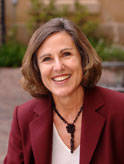 "This extraordinary gift from the Jim Joseph Foundation allows Stanford to lead the country in the study of the nexus of culture, religion, and education," said Deborah Stipek, dean of the School of Education. "Scholarship in this area is critical to understanding the central role of religion in education, and its broad implications for humanity. We are deeply grateful to the foundation
for this opportunity."
"This extraordinary gift from the Jim Joseph Foundation allows Stanford to lead the country in the study of the nexus of culture, religion, and education," said Deborah Stipek, dean of the School of Education. "Scholarship in this area is critical to understanding the central role of religion in education, and its broad implications for humanity. We are deeply grateful to the foundation
for this opportunity."
About the Author Peter Menkin, an aspiring poet, lives in Mill Valley, CA USA (north of San Francisco). My blog: http://www.petermenkin.blogspot.com
Article Source: http://www.articlesbase.com/ - 12 million Chair in Jewish studies at Stanford University reconstituted by Peter Menkin